مواقع التدريسيينجامعة الكوفة
0Publications
0Lectures
0Interests
0News

About

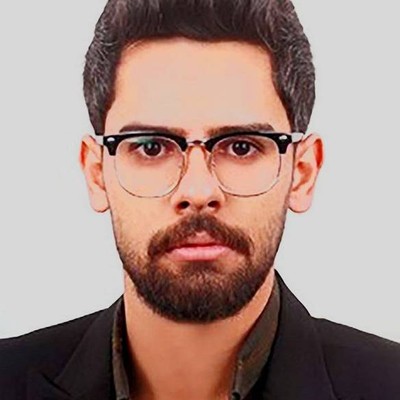
Name: Mohammed Kadhim Shareef Alsaeedi

Place and year of birth: Al-Najaf Al-Ashraf 6/25/1994

Languages:
1- Arabic (mother language)
2- English (good)
3- Persian (very good)

Academic biography:
1- Bachelor of Mathematics and Computer Science / Kufa 2018
2- Master of Mathematics / Ferdowsi Mashhad 2021
3- PhD in mathematics / Ferdowsi Mashhad 2025

Holds certificates:
Teaching methods
Safety of the Arabic language
Adequacy of teaching skills

Research Interests

4

Publications

3
2025

Text Encryption and Decryption Using the Logistic Function: MKTEXT-6

AuthorsMohammed Abdulhameed Jassim, Mohammed Alaseedi, Abbas Jadi, Hasan Abdulhussein Ahmed
JournalInternational Journal of Applied Mathematics
Date2025-09-28
Abstract

We continue to develop our algorithms, initially designed for image encryption, to ensure they are also valid for text encryption. This is a challenging task because text encoding does not tolerate any errors, unlike image encryption, where minor numerical inaccuracies may be acceptable. The numerical values of text components must be retrieved accurately. In this study, we build upon our previous algorithm (MK-11), which used Generalized Singular Value Decomposition (GSVD) technology combined with a logistic function for image encryption with a real-number encryption key. We introduce a new algorithm that relies solely on the logistic function, employing a method of dispersal and retrieval of numerical values to encrypt text effectively. We assess the quality of this new algorithm by applying it to various text samples, as we did with our previous algorithm (MKTEXT-5). Our algorithm operates in two main steps: First, we convert the text to be encrypted into a vector of numerical values, using the ASCII values corresponding to the letters and symbols stored in the computer. Second, we disperse the numerical values of this vector using the encryption key (a real number) and the logistic function. The results we obtained are excellent and error-free, outperforming our previous algorithms in terms of quality, speed, and accuracy. We reaffirm that these algorithms are suitable for use in various fields, such as information security in banks, universities, and public and private institutions. We will detail the algorithm, results, and related readings in the subsequent sections of our research

2025

Solution Techniques for Fuzzy Graph Partitioning Based on Heuristic Optimization

AuthorsMohammad Alsaeedi, Mostafa Tavakolli, Ahmad Abouyee, Khatere Ghorbani Moghadam, Reza Ghanbari
JournalControl and Optimization in Applied Mathematics
Date2025-07-01
Abstract

In this study, we proposed a novel graph partitioning problem where the edges are characterized by trapezoidal fuzzy numbers. A linear ranking function is employed to establish an order among these fuzzy numbers. We derive the necessary conditions for the existence of an optimal solution to this problem. To address the fuzzy graph partitioning problem, we implement and compare the performance of three algorithms: Genetic Algorithm, Tabu Search, and Sequential Least Squares Programming. The algorithms are evaluated based on objective values, computational time, and the number of iterations across multiple numerical examples. Utilizing Dolan-Moré performance profiles, we demonstrate the superiority of our proposed approach relative to existing methods. The fin…

2018

A Statistical Study of the Level of Quality of University Services as Perceived by Students

AuthorsIrtefaa A. Neamah, Mohammed Alaseedi
JournalJournal of Statistics and Mathematical Sciences
Date2018-09-21
Abstract

In this study, the empirical investigation conducted to investigate the service quality perception of the students about the level of service quality provided by their faculty, (Faculty of computer science and mathematics) and significant determinants of service quality of faculty of computer science and mathematics in University of Kufa. Data is collected through questionnaires involving different students (male and female) from each department. The study found that the students are not satisfied with the level of medical service, while they are satisfied with the service of maintenance. According to the T- test, the results of this study provided that the general average of service quality in this faculty is less than good with confidence level 95%.

Lectures

28

المحاضرة الاولى

الاحصاء المتقدم

المحاضرة الثانية

الاحصاء المتقدم

المحاضرة الثالثة

الاحصاء المتقدم

المحاضرة الرابعة

الاحصاء المتقدم

المحاضرة الخامسة

الاحصاء المتقدم

المحاضرة السادسة

الاحصاء المتقدم

المحاضرة السابعة

الاحصاء المتقدم

المحاضرة الثامنة

الاحصاء المتقدم

المحاضرة الاولى

نظرية البيانات

المحاضرة الثانية

نظرية البيانات

المحاضرة الثانية

نظرية البيانات

المحاضرة الثالثة

نظرية البيانات

المحاضرة الرابعة

نظرية البيانات

المحاضرة الخامسة

نظرية البيانات

المحاضرة السادسة

نظرية البيانات

المحاضرة السابعة

نظرية البيانات

المحاضرة الثامنة

نظرية البيانات

المحاضرة التاسعة

نظرية البيانات

المحاضرة العاشرة

نظرية البيانات

المحاضرة الحادية العشر

نظرية البيانات

المحاضرة الأولى

نظرية الاعداد

المحاضرة الثانية

نظرية الاعداد

المحاضرة الثالثة

نظرية الاعداد

المحاضرة الرابعة

نظرية الاعداد

المحاضرة الخامسة

نظرية الاعداد

المحاضرة السادسة

نظرية الاعداد

المحاضرة السابعة

نظرية الاعداد

المحاضرة الثامنة

نظرية الاعداد

News & Announcements

2
News 2025-09-26

Seminar entitled (The Question of the Seven Bridges of Königsberg)

As part of the Department of Mathematics' series of specialized scientific and research seminars, and in continuation of the academic plan for the 2023-2024 academic year, and to highlight the importance of mathematics and its significant impact on other sciences and their applications, the Department of Mathematics held a seminar titled "The Königsberg Seven Bridges Problem" on Tuesday, February 27, 2024, within the Department of Mathematics. Assistant Lecturer Muhammad Kazim Sharif gave a lecture, presenting a historical overview of the city of Königsberg, which was part of the German Empire and where the famous Seven Bridges Problem occurred in 1735 AD. The researcher also described the problem. The city was located on both sides of the Pregel River and included two large islands connected to the mainland by seven bridges. The challenge lay in finding a path that would pass through all the bridges without crossing any one bridge more than once. In 1736, mathematician Leonhard Euler published a scientific paper proving the impossibility of such a path. Euler's proof marked a milestone in the history of mathematics, laying the foundations for data theory and the subsequent development of topological ideas. The researcher then explained Euler's main insight: abstracting the problem by representing land areas as a point (vertex) and each bridge as a line (edge), creating what is now known as a graph. At the same time, the researcher discussed how Euler proved that for this path to be possible, each point in the graph must contain an even number of lines (edges), excluding the starting and ending points.

Announcements 2023-05-16

Teaching mathematics is teaching problem solving https://www.mehrnews.com/news/5610813

Reverse learning is one of the methods of teaching mathematics in a hybrid way He stated that flipped learning for math instruction is one of these measures in teaching mathematics, and added: In this method, the student learns with the help of video educational content and textbooks, just like a real classroom, and his presence in the class is a golden opportunity. The lesson is spent together with the teacher to fix problems and solve more difficult problems. This specialized mathematics teacher stated that nowadays, with the internet and a simple search, you can get these professional mathematics video tutorials from elementary school to entrance exams, and said: In this way of teaching, it is possible to update all the educational materials at the same time. Salamian stated that the Corona pandemic proved to mankind that distances and borders have no meaning anymore and that this method of education can be used for all Persian speakers all over the world, and further noted that Iran has many immigrants in Canada, Australia and Europe who can Learn this method of mathematics in mother tongue. He mentioned that one of the important missions of a math teacher is to teach the audience how to learn math and added: The duty of every human being in today's world is to learn how to learn. This specialized mathematics teacher emphasized again the modern methods of teaching mathematics according to the conditions of the day and based on educational videos. In this innovative educational method of Play, pause, practice, the student executes the educational video (Play) and stops it after solving the problem. Pause) and he solves and practices the problem with his handwriting in the educational booklet so that the problem is fixed in his mind. With this method of education, students in all parts of the country and the world learn math faster without facing problems such as traffic and wasting time between classes. Basic sciences such as mathematics can indirectly cultivate the human mind Salamian explained about the nature of the math course: understanding math and logic is one of the distinct characteristics of humans (the difference between humans and animals). Basic sciences such as mathematics can be indirectly effective in the mental development of humans, in other words, learning mathematics can affect the structure of the brain and mathematical thinking is a means It is powerful to solve everyday problems of life and human inventions. The excellence of many famous inventors and physicians is derived from mathematical and engineering thinking And Salamian continued: The most famous inventors excelled in mathematics and engineering, even plastic and cosmetic surgeons whose results were satisfactory consider their work as a result of engineering thinking and spatial visualization and their excellence in mathematics and engineering. He mentioned that: specialized centers for teaching mathematics always try to teach the learner the art of solving problems through the method of solving problems, in other words, with the help of problem solving, in the sense that the learner can solve a new problem by breaking a difficult problem into smaller and simpler problems. By solving mother’s problems, Mathematics teachers teach the audience the right way to deal with it, so that the audience can solve any new problem with the help of the mother's previous problems.

View details