
مواقع التدريسيينجامعة الكوفة
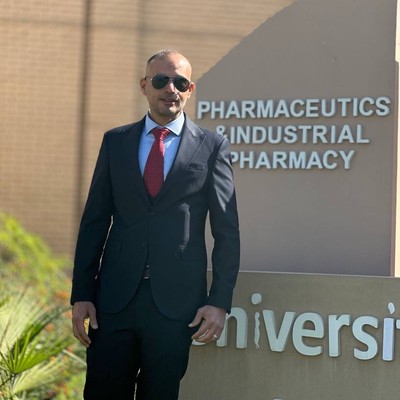
Krar Kadhim Mohamd Jawad Al-Hasani
Lecturer

Krar Kadhim Mohamd Jawad Al-Hasani

0Publications
0Lectures
0News

About

EDUCATION:

B.Sc . In Pharmacy from University of Petra / Collage of Pharmacy, Attended from 2004-2009.

<M.Sc . In Pharmacy / Pharmaceutics from University of KUFA / Faculty of Pharmacy , Attended from 2017-2019.

OCCUPATION

Demonstrator in the Department Pharmaceutics and Industrial pharmacy /Faculty of Pharmacy /University of KUFA 2011 - 2019

A. Lecturer in the Department Pharmaceutics and Industrial pharmacy /Faculty of Pharmacy /University of KUFA 2019 till 16oct 2022

Lecturer in the Department Pharmaceutics and Industrial pharmacy /Faculty of Pharmacy /University of KUFA 2022 till now

Publications

5
2023

PREPARATION AND IN VITRO EVALUATION OF SELF-NANO EMULSIFYING DRUG DELIVERY SYSTEMS OF KETOPROFEN

AuthorsALI N. WANNAS;, MAZIN THAMIR ABDUL-HASAN; KRAR KADHIM MOHAMMED JAWAD; INAS F. ABDUL RAZZAQ
JournalInternational Journal of Applied Pharmaceutics
Abstract

ABSTRACT Objective: The aim of this study was to formulate, evaluate and characterise nanoemulsion formulation containing a lipophilic drug, Ketoprofen. Methods: Nanoemulsion formulations composed of oil, surfactant, co-surfactants and Ketoprofen were prepared. In all formulations, the percent of surfactants, as well as oil, was varied while the amount of Ketoprofen kept constant. Solubility studies were conducted to select the oil, surfactant and cosurfactant. Phase diagrams were constructed using the aqueous phase titration method. Formulations were selected from the phase diagrams. The prepared nanoemulsions were subjected to different thermodynamic stability tests. Results: Following optimization, the F7 formula (10% oil, 3:1 surfactant to co-surfactant) was thermodynamically stable, with a droplet size of 105 nm and a zeta potential of-26.21 mV. In vitro release study showed that the drug release pattern from formulations F5, F6, F7, F8, F9 and F10 was higher than that of F1, F2, F3 and F4. Conclusion: The present work demonstrates that the nanoemulsion is a promising drug delivery system approach for the enhancement of solubility and dissolution rate of Ketoprofen. DOWNLOADS

2022

In-Vitro Comparative Quality Evaluation of Paracetamol Tablets Marketed in Iraq

AuthorsKrar Kadhim Mj , Hayder Kadhim Abbas , Dhurgham Q.Shaheed
JournalJournal of Medicinal and Chemical Sciences
Abstract

One of the crucial responsibilities of pharmacists is to provide Iraqi people with safe and effective medicines. Quality control tests have been performed to ensure that these medicines could meet acceptable standards of quality, efficacy, and safety. Paracetamol is an analgesic medication that is used very frequently; thus, this study aimed to quality evaluate different brands of paracetamol 500 mg tablets marketed in Iraq, four brands of paracetamol tablets were used in the study obtained from private pharmacies. Method: The selected paracetamol tablets were evaluated using standardized quality tests such as: weight variation, drug. Content uniformity, tablets hardness test, tablets friability, disintegration test, and dissolution test. Results: The tablets were assessed to check if they conform with the specifications of United States Pharmacopeia (USP). From the analysis of the results, it was observed that the weight variation showed an acceptable range. drug content in all selected paracetamol tablets was found between96.8%-101.2%; it was within the specified 85%-115% standard range. Friability tests showed that all selected tablets were within USP’s 1% mass loss limits. Doliprane and Neomol showed comparatively acceptable limits of hardness. All tablets disintegrated were within a time limit of less than 15 minutes. Additionally, an in vitro release study of the drug in 0.1 N HCl (pH 1.2) and phosphate buffer (Ph 6.8) exceeded 90% after 75 min. The FT-IR study showed that the main characteristic bands of FT-IR spectra for the active ingredient (paracetamol) were found in all-selected tablets and the FT- IR spectra of pure drug. This study concluded that all selected Paracetamol tablets were met pharmacopeial standards.

2022

QUALITY EVALUATION OF BRANDS OF PROPRANOLOL HCL TABLETS AVAILABLE ON IRAQI MARKET

AuthorsMAZIN THAMIR ABDUL-HASAN, KRAR KADHIM MOHAMMED JAWAD
JournalInternational Journal of Applied Pharmaceutics (Int J App Pharm) i
Abstract

ABSTRACT Objective: The purpose of this study is to evaluate the quality control of marketed tablets containing propranolol hydrochloride available on the Iraqi market and manufactured by different companies. Methods: Different batches of propranolol hydrochloride 40 mg tablets were assessed using quality control tests. Weight variation, diameter, thickness, friability, disintegration time and dissolution study were carried out in this study. Results: Based on the data obtained in this study, all brands of PPL available on the Iraqi market showed weight variation within the acceptable limit of USP. Marketed products of Becardin and Propranolol lie within the acceptable limit of hardness and Inderal was observed to be slightly higher than the normal upper range of USP. Diameter and thickness for all brands were almost the same, except the diameter of Becardin was slightly higher and friability was zero for all brands. All brands demonstrated a time of disintegration of fewer than 30 min. The tested marketed propranolol products; Inderal, Procard, Becardin and Propranolol showed cumulative drug release of 90.08%, 94.46%, 92.4% and 79.51%, respectively at the end of the first 20 min. This variation in the release profile of marketed tablets of Propranolol HCl might be attributed to the excipients present in the marketed tablets where some of these excipients may behave as a disintegrant and enhance dissolution rate while others may act as dissolution retardants. Conclusion: All marketed tablets of Propranolol HCl employed in this study were produced within the standard criteria of tablet manufacturing. Evaluation of quality control of these selected tablets showed acceptable pharmaceutical properties that lie within the limits of USP.

2021

DEVELOPMENT OF CONTINUOUS ANTI-SOLVENT RECRYSTALLIZATION METHOD TO PRODUCE CEFTRIAXONE SODIUM NANO CRYSTALS INJECTION USING CERAMIC FILTRATION

AuthorsFiras Aziz Rahi 1 , Krar Kadhim Mj
JournalWiadomosci lekarskie
Abstract

Abstract Objective: The aim: In this work we developed a method of continuous recrystallization to meet industrial requirements. Patients and methods: Materials and methods: Continuous recrystallization method was investigated using porous ceramic filter for water purification with pour size less than 1 μm, that ensures high mixing rate of ethanol and water. Results: Results and conclusions: The results of experiments using crystallization through ceramic filter, gives superior products in particle size, and produced needle shaped ceftriaxone crystals form, that showed significant improvement in dissolution time and obtained ceftriaxone sodium powder to be reconstituted in injectable formula that give clear solution without insoluble microparticles.

2019

Preparation of Needle-shape Crystalline Lyophilized Ceftriaxone Sodium

AuthorsKarar Kadhim Mohammed Jawad*, , Fras Aziz Rahi**
Journalمجلة الاطروحة العلمية المحكمة.
Abstract

Abstract : Ceftriaxone sodium a third generation cephalosporins antibiotic, that widely used in medical field, this study aimed to produce recrystallized ceftriaxone sodium with needle-shape by using ethanol as antisolvent and develop a process that applicable in large-scale of production. In this study ceftriaxone sodium raw powder was evaluated by UV-spectroscopic , HPLC chromatography, melting point determination and pH determination. Wherein the main steps for recrystallization process comprise:1- dissolving the ceftriaxone by water, and decolorized by using charcoal; 2- filtrate the product; 3- sterile filtration by pumping the solution through membrane; recrystallization by adding ethanol and cooling down; enable crystals growth in corresponding crystallization temperature. The product was evaluated and the crystallinity studied by P-XRD and crystals photographed by SEM, the FTIR spectroscopy confirm that no chemical interaction happen during process. The process was developed and best time and temperature was determined to produce needle-shape ceftriaxone sodium crystals that show faster dissolution time, better stability and superior quality.

Lectures

17

News & Announcements

2
News 2024-03-03

Seminar was held at the College of Pharmacy at the University of Kufa entitled: Biohybrid Micro- and Nanorobots Drug Delivery Systems

he seminar aimed to review and Discuses Challenges and Opportunities in Design and Development of Biohybrid Micro- and Nanorobots for Medical Applications. The Seminar highlights the dynamic foundation of nanorobots, reviews the latest developments in nanorobots research, and focuses on their applications in medical diagnosis and treatments, and the major challenge of medical nanorobots is from the laboratory to clinical application. And the seminar emphasize that Micro and nanorobotic research is moving towards the clinic by exploring recent Micro and nanorobotic pharmaceutical preparations recently applied for registration process. This seminar conclusion was determined the researcher opportunities, capabilities’ and resources to do scientific researches in this field.

News 2022-11-21

3D Printing Technology in Pharmaceutical Dosage Forms

A Seminar was held in University of KUFA, entitled (3D Printing Technology in Pharmaceutical Dosage Forms), presented by A.Lec. Karar Kadhim MJ This seminar aimed to exploring the current innovative research surrounding the topic of 3DP, focusing on bioprinting and various types of 3DP on applications for drug delivery as well advantages and future directions in this field of research. The Seminar include Introduction to 3D Printing , Definition, Classification of 3D Printing Technologies. As well as, Steps involved in 3DP dosage forms and Techniques of 3DP dosage forms. The seminar also reviews 3D printing of drug delivery systems, Advantages of 3DP dosage forms and Limitation of 3DP dosage forms also. This Seminar conclude that 3D printing is one of the most revolutionary and powerful tool serving as technology of precise manufacturing of individually developed dosage form. 3D printing can play a significant role in multiple active ingredient dosage forms, where the formulation can be as a single blend or multi layer printed tablets with sustained release properties.

View details