
مواقع التدريسيينجامعة الكوفة
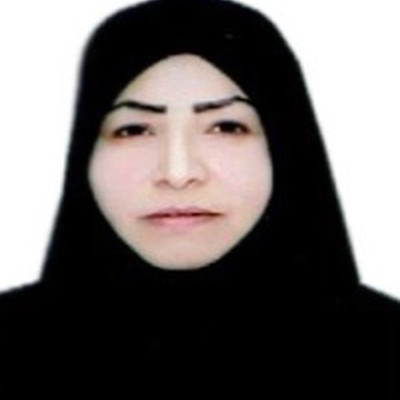
salwa hamzia hussien AL-hassnawy
Assistant Professor

salwa hamzia hussien AL-hassnawy

0Publications
0Lectures
0Interests

About

1- Full name : Salwa Hamzia HussienRaid .
E.mail :[email protected]
---------------------------------------------------------------------------------
2- Date of Brith : 1979 Najaf .
3- Nationality : Iraq .
4- Official address : Kufa University \ College of education of girls..
6- Education

Specialization Date of graduation University Certificate
Biology 2004 AL-kufa– collage of science Bachelor
Molecular Genetic 2016 AL-kufa– collage of science Masterof science

Research Interests

1

Publications

10
2023

Morphological Study of Pollen Grains and Seeds in Two Species from the Family Poaceae in Iraq

AuthorsSalwa Hamza Hussein Al-hassnawy, Wijdan Kamal Noor Shalan Al_Qraawy
JournalResearch & Reviews: Journal of Botany
Abstract

The current study is a comparative anatomical study of species of the Poaceae family growing in different regions of Iraq, namely Ammochloa palaestina Boiss., Schismus barbatus Thell., Schismus arabica Nees. , Arundo donax L., and Cymbopogon bakeri cont. The anatomical study included the anatomy of the spikelet. The results of the current study showed that the anatomical features are of great taxonomic importance and help in isolation and diagnosis, through the many variations shown by the anatomical characteristics of the studied species. The spikelet pedicels showed important anatomical characteristics in terms of the epidermis, as the species were similar in terms of thickness and rippling of the epidermis, with the exception of A.palaestina, whose epidermal cells were of medium thickness, and A.donax, which was straigh Spiklete pedicels were characterized by the presence of stomata, as the stomata differed in their dimensions, numbers, and shapes, in addition to their arrangement, which was considered an important characteristic in isolation and diagnosis. The stomata are also organized in such a way that only one long cell separates one stomata from another and has been recorded in the species S. arabica except for the species A.donax, S. barbatus, A.Palaestina and C. bakeri, where two long cells separate between them, separated by one short cell or more than two cells. two long. The epidermis also varied in the shapes, numbers and distribution of short cells, as the type S. barbatus was unique in not containing cork cells associated with a silica cell compared with other species, while the two types C. pakeri and A.donax were unique in containing only cork cells associated with a silica cell paired with another pair of cells, which was considered an important taxonomic characteristic. The surface cover of the epidermis of the alveoli was represented by only one type, which is thorns. The thorns varied in size between medium and large, and were characterized by their elongated oval base. The thorns were generally distributed between and between the veins, and this characteristic did not show any difference between the studied species except for the type A. palaestina, which Unique not to contain thorns. All these characteristics contributed to the addition of distinctive characteristics to each species, important in isolating and diagnosing it.

2023

Study of the anatomical characteristics of cross sections in two species of the genus Schismus of the Poaceae Family in Iraq

AuthorsSalwa Hamza Hussein Al-hassnawy, Wijdan Kamal Noor Shalan AlQraawy
JournalResearch & Reviews: Journal of Life Sciences
Abstract

The current research included a comparative anatomical study of two species belonging to the genus Schismus L. is from the Poaceae family and grows wild in Iraq. The two species are Schismus arabicus Nees and Schismus barbatus (L.) Thell. The study included anatomical aspects, the study of anatomical characteristics had taxonomic importance in supporting phenotypic traits in diagnosing and isolating the studied species. As the characteristics of the cross-sections of the spikelet Pedicels were studied, as the sections were circular or semi-circular in shape, and half of them were solid and the other half were hollow. Thus, this characteristic was useful in isolating the two species of genus Schismus by separating the species S. arabica with a solid spikelet Pedicels from the species S. barbatus, which was hollow, as well. The results of the study of the cross-sections of the vegetative parts showed that they contain two tissues, parenchyma and sclerenchyma, and that the method of distribution and arrangement of these tissues varied between the different plant parts and at the level of the studied species The cross-sections of the vesicles of the two genus studied contained vascular bundles of the closed and lateral type. Although they were scattered within the primary tissue, they were distinguished by three patterns of arrangement, The first is represented by small bundles close to the periphery of the Pedicels, Minor or peripheral vascular bundules, as they are submerged in the sclerenchyma tissue under the epidermis, The second is represented by the major vascular bundles or major vascular bundules, which are immersed in the parenchymal tissue, while the third is represented by the vascular bundles that lie between these two arrangements, as the vascular bundles are connected at their apex to the sclerenchyma tissue under the epidermis, while they are surrounded from their sides and the base by the parenchymal tissue, and they are also major bundles. The differentiation of the vascular elements of the wood is more evident in the main bundles than in the peripheral bundles

2022

Comparative Biochemical Study of Plant for Leaves andBark of Ziziphius spina Christi L. Using Gas Chromatography Mass Spectrometry

AuthorsSalwa Hamza1, Nada Mohammed Reda, Zainab Abdul Ameer Mohammed
JournalResearch & Reviews: A Journal of Biotechnology
Abstract

The aim is Comparative Pharm-Chemical Study for Leaves and Bark of Ziziphius spina Christi L. Using Gas Chromatography Mass Spectrometry. The Biochemical study dealt with the chemical content of the leaves and bark of the stem of the studied Ziziphius spina Christi.L, as the medicinal-chemical compounds were diagnosed using Gas Chromatography Mass Spectrometry (GC/Mass) by comparing the chemical content. appearance of the repetition of some chemical compound Hexen-2-one,3-methyl- , Oxalic acid, allyl pentyl ester, Cyclobutane,1-cyclopropyl-2-ethenyle-, Propane,1-nitro, was recorded in the leaves and bark of the stem of the Ziziphius spina Christi.L under study, in curved areas and different detention times for the same type by GC-Mass device, as the lowest number of chemical compounds was identified. The (20) compounds in the alcoholic extract of leaves Ziziphius spina Christi.L, while the maximum number of (90) compound was in the alcoholic extract of bark Ziziphius spina Christi.L, and the lowest retention time was (13.360) minutes for the compound N-(Dimethyl thiophosphinyl)ethylamine while the maximum detention time was (24.238) minutes for the compound Furanacetaidemi,N-methyle--in the leaves, while Ziziphius spina Christi.L Bark contained (90) compounds and the minimum retention time was (2.622) minutes for the compound Hexen-2-one,3- methyl-4 and the maximum detention time was (25.841) minutes for the compoundHexanal,4,4- dimethyl-, and by comparing the chemical content of Ziziphius spina Christi.L leaves and bark, only (3) chemical compounds were similar.

2022

Comparative Biochemical Study of Plant for Leaves and Bark of Ziziphius spina Christi L. Using Gas Chromatography Mass Spectrometry

AuthorsSalwa Hamza, Nada Mohammed Reda, Zainab Abdul Ameer Mohammed
JournalResearch & Reviews: A Journal of Biotechnology
Abstract

The aim is Comparative Pharm-Chemical Study for Leaves and Bark of Ziziphius spina Christi L. Using Gas Chromatography Mass Spectrometry. The Biochemical study dealt with the chemical content of the leaves and bark of the stem of the studied Ziziphius spina Christi.L, as the medicinal-chemical compounds were diagnosed using Gas Chromatography Mass Spectrometry (GC/Mass) by comparing the chemical content. appearance of the repetition of some chemical compound Hexen-2-one,3-methyl- , Oxalic acid, allyl pentyl ester, Cyclobutane,1-cyclopropyl-2-ethenyle-, Propane,1-nitro, was recorded in the leaves and bark of the stem of the Ziziphius spina Christi.L under study, in curved areas and different detention times for the same type by GC-Mass device, as the lowest number of chemical compounds was identified. The (20) compounds in the alcoholic extract of leaves Ziziphius spina Christi.L, while the maximum number of (90) compound was in the alcoholic extract of bark Ziziphius spina Christi.L, and the lowest retention time was (13.360) minutes for the compound N-(Dimethyl thiophosphinyl)ethylamine while the maximum detention time was (24.238) minutes for the compound Furanacetaidemi,N-methyle--in the leaves, while Ziziphius spina Christi.L Bark contained (90) compounds and the minimum retention time was (2.622) minutes for the compound Hexen-2-one,3- methyl-4 and the maximum detention time was (25.841) minutes for the compoundHexanal,4,4- dimethyl-, and by comparing the chemical content of Ziziphius spina Christi.L leaves and bark, only (3) chemical compounds were similar

2022

Comparative anatomical study of the spikelet Pedicels of selected species of different Tribes belonging to the Poaceae family in Iraq

AuthorsSalwa Hamza Hussein Al-hassnwy , Amal Rdhaiwi Dhayef Al-Lihebawee
JournalResearch & Reviews: Journal of Botany
Abstract

The current study is a comparative anatomical study of species of the Poaceae family growing in different regions of Iraq, namely Ammochloa palaestina Boiss., Schismus barbatus Thell., Schismus arabica Nees. , Arundo donax L., and Cymbopogon bakeri cont. The anatomical study included the anatomy of the spikelet. The results of the current study showed that the anatomical features are of great taxonomic importance and help in isolation and diagnosis, through the many variations shown by the anatomical characteristics of the studied species. The spikelet pedicels showed important anatomical characteristics in terms of the epidermis, as the species were similar in terms of thickness and rippling of the epidermis, with the exception of A.palaestina, whose epidermal cells were of medium thickness, and A.donax, which was straigh Spiklete pedicels were characterized by the presence of stomata, as the stomata differed in their dimensions, numbers, and shapes, in addition to their arrangement, which was considered an important characteristic in isolation and diagnosis. The stomata are also organized in such a way that only one long cell separates one stomata from another and has been recorded in the species S. arabica except for the species A.donax, S. barbatus, A.Palaestina and C. bakeri, where two long cells separate between them, separated by one short cell or more than two cells. two long. The epidermis also varied in the shapes, numbers and distribution of short cells, as the type S. barbatus was unique in not containing cork cells associated with a silica cell compared with other species, while the two types C. pakeri and A.donax were unique in containing only cork cells associated with a silica cell paired with another pair of cells, which was considered an important taxonomic characteristic. . The surface cover of the epidermis of the alveoli was represented by only one type, which is thorns. The thorns varied in size between medium and large, and were characterized by their elongated oval base. The thorns were generally distributed between and between the veins, and this characteristic did not show any difference between the studied species except for the type A. palaestina, which Unique not to contain thorns. All these characteristics contributed to the addition of distinctive characteristics to each species, important in isolating and diagnosing it

2022

Diagnosis and Treatment of Hepatitis B Infection in Children: A Review

AuthorsSalwah Hamza Hussein, Methakabd Alrazak Aziz, Sahar Jabber Mohsin, Taghreed Fakhir Gaber, Zainab Assim Mahdi, Aseel Kemal Abdul Hussein and Wifaq Ahmed Mahmood
JournalACE Research Journal of Microbiology and Biotechnology
Abstract

Hepatitis B virus infection is a major public health problem worldwide. The country bears the largest burden in the world in terms of hepatitis B infection and will be a major contributor to the global elimination of hepatitis B disease by 2030. The country has made good progress in reducing hepatitis B virus infection. Hepatitis B virus infection in the past three decades. The achievements are mainly attributable to high vaccination coverage rates among children and high coverage of an appropriate dose of birth vaccine to prevent mother-to-child transmission of hepatitis B virus (both >95%). However, Iraq still faces challenges in achieving its target of reducing hepatitis B mortality by 65% by 2030. Building on the objectives of the WHO Global Health Sector Strategy on Viral Hepatitis 2016-2021, we highlight other priorities for action to eliminate hepatitis B virus in Iraq to achieve the impact goal of reducing mortality, we suggest prioritizing service coverage objectives for diagnosis and treatment. First, there is a need to improve the diagnostic and treatment capabilities of medical institutions and health workers. Second, the government needs to reduce the financial burden of healthcare on patients. Third, there is a need for better coordination across existing national programs and resources to create an integrated prevention and control system that covers prevention, examination, diagnosis and treatment of HIV infection. Hepatitis B across the life cycle In this way, progress can be made towards the goal of eliminating hepatitis B in Iraq by 2030.

2021

Diagnosis and Treatment of Respiratory Tract Infection in Children: A Review

AuthorsSalwah Hamza Hussein, Methak abd Alrazak Aziz, Wifaq Ahmed Mahmood, Furqan Saddam Salman and Suhair Abdul Kareem Habeeb
JournalACE Journal of Research Studies in Biosciences
Abstract

Abstract: Respiratory tract infection are common serious infection in children. History and examination can be non-specific sputum example required to diagnosis. Collect sputum dipstick test are useful for screening bedside sputum culture for diagnostic contamination. To select of appropriate antibiotics for treatment must be subject to tests due to increasing resistance of bacteria to antibiotics. Other children, however, need to take antibiotics daily to prevent infection. Some mild to moderate cases of respiratory infections can resolve on their own without treatment. Respiratory infection spreads in children of all ages and the matter is often delayed quickly, due to the mother's lack of awareness of this problem and her lack of knowledge of its symptoms, so, get acquainted with us today about the symptoms, causes and treatment of respiratory infection in children.

2021

Diagnosis and Treatment of Respiratory Tract Infection in Children: A Review

AuthorsSalwah Hamza Hussein,, Methak abd Alrazak Aziz, Wifaq Ahmed Mahmood, Furqan Saddam Salman and Suhair Abdul Kareem Habeeb
JournalACE Journal of Research Studies in Biosciences
Abstract

Respiratory tract infection are common serious infection in children. History and examination can be non-specific sputum example required to diagnosis. Collect sputum dipstick test are useful for screening bedside sputum culture for diagnostic contamination. To select of appropriate antibiotics for treatment must be subject to tests due to increasing resistance of bacteria to antibiotics. Other children, however, need to take antibiotics daily to prevent infection. Some mild to moderate cases of respiratory infections can resolve on their own without treatment. Respiratory infection spreads in children of all ages and the matter is often delayed quickly, due to the mother's lack of awareness of this problem and her lack of knowledge of its symptoms, so, get acquainted with us today about the symptoms, causes and treatment of respiratory infection in children.

2020

Comparative genetic study for some species of the family Poaceae using the RAPD molecular indicator

AuthorsSalwah Hamza Hussein Alhassnwy, Ruqayah Manoon AlnomaniRuqayah Manoon Alnomani
JournalInternational Journal of Pharmaceutical Research
Abstract

Isolation of the genomic DNA from leaves of the species under study belonging to different genera withconcentrations ranging between (210 - 648) ng / microliter and a purity of 1.8) which was estimated by a Biodrop device at the wavelengths of 260 and 280 nm Random Amplified Polymorphic DNA (RAPD) was carriedout to prepare the genetic signature of 8 species of the grass family belonging to different tribes. Thediscrepancies between the replicated pieces of each species (their numbers and molecular sizes) weredetected after the replication products of the samples were migrated onto the acarose gel and stained. Withthe stain of ethidium bromide. (9) primers were chosen, which showed different multiplication productsamong the studied species, as those prefixes showed (34) polymorphic bands out of (82) total main bandsEach selected primer produced between 24 (OPY-04) to 88 (OPU-03) bands. The size of the multiplicons(amplicons) ranged from 100 base pairs (OPM-18) to 1525 base pairs (OPC-09). The largest number ofdisparate bands (heterogeneous) (6) bands produced by the prefixes (OPC-09) and (OPJ-08) while it appearedthat the least number of varying bands (0) bands were produced by the primer (OPY-04). The prefixes differedin their ability to find different types of patterns between the studied species, the polymorphic RAPD profile, inwhich it was possible to find the genetic fingerprint of the species under study from the grass family( Poaceae)that belonged to different tribes and that reflects various individual features specific to the DNA (fingerprints) .The primers efficiency ranged from (0) in primer (OPY-04) to (0.09) in primer (OPW-01), primer (OPJ-08)and primer (OPF-05). It was found in this study that the primers (OPJ-08) and (OPC-09) had the least ability todistinguish reached around (17.64%). The primer (OPY-04) had the highest ability to distinguish is (0%) whilethe primers (OPF-05) has the highest value for polymorphism (57.1%), while the primer (OPY-04) has thehighest value for polymorphism (0%) .The lowest genetic dimension was( 0.053) between the species S. divaricatus and A. palaestina , while thegreatest genetic dimension was (0.61146 ) between the species L. hirsutus and S. arabicaThe meta-analysis revealed an unweighted pair-group method of arithmetic means (UPGMA), that is, based onthe evolutionary tree of relationships into two major genetic groups or two major genera that included thefirst clade species L. hirsutus and C.pakeri, either. The second clad included two subgroups. The first oneincluded S.barbatus species with a single clade alone. The secondary subgroup was divided into 3 subgroups,(3subclades). The species S. arabica descended into a secondary subclade alone and coalesced with it with thesecond subclade 2 subclade that combines the two species P.incurva and A. donax, while the two speciesincluded S. divaricatus and A. palaestina within asecondary subclade .The isolation of the species in groups or clusters from each other indicates the reliability of the genetic traitsin separating the species. As for the similarity that some species came with this results from the fact that theyhave a common ancestral origin (1) (PDF) Comparative genetic study for some species of the family Poaceae using the RAPD molecular indicator.

2019

STUDY THE EFFECT OF DRY BREAD YEAST SACCHAROMYCES CEREVISIAE, IN SOME QUALITIES OF VEGETATIVE GROWTH AND NUTRITIONAL STATUS OF THE LENS CULINARIS

Authorsبثينة عبد الناصر, سلوى حمزه حسين فرقان صدام سلمان حميدة عبد نور
JournalPlant archives
Abstract

The study was conducted in, which is one of the private nurseries in the province of Najaf, so as to test the viability of dry bread yeast on internal nutritive content and vegetative growth of Lens culinaris plants. The plants where treated after 20 days from sowing by concentrations (0,10, 20) g/L of yeast solution and by foliar application or glaucoma around roots and method of integration between by tripled separates the one and the other 10 days. Results of the study showed that there are significant differences in the studied growth indicators and characteristics of leaves inner chemical of plants treated different concentrations and with all the methods used compared with plants is not treated with a solution of yeast. As noted by the results that the highest rate in the traits of the stem has reached (43.90 cm, 6.59 cm; 10.98) for the length of the stem and the length of the internodes and the number of nodes respectively, in the plants treated by spray and glaucoma around roots with (10) g / L. With regard to the characteristics of the stem, the results pointed to the positive effect of the dry bread yeast solution which reported significant differences in the characteristics of leaves, compared with the control treatment and the highest rate of the number of leaflets, and leaf area, and the content of total chlorophyll was (26.00, 11.840 cm 2, 154.67 mg/100 g wet weight) respectively when plants treated by spray and glaucoma around roots together with (10) g / L, as well as in fresh and dry weight where this treatment gave the highest average (0.0382 g, 0.462 g) and respectively. The results also indicated thst there were significant differences in the chemical characteristics of the leaves when treated with a solution of dry bread yeast, where the treatment of overlapping recorded between spraying and glaucoma around the roots with (10) g / L higher rate to the percentage of nitrogen, phosphorus and potassium were 1.23 and 2.67 and 3.08 respectively, in the amount of total carbohydrates and proteins, reaching its highest level at which the transaction amounted to 16.90 and 8.889 respectively.

Lectures

17
View details