مواقع التدريسيينجامعة الكوفة
0Publications
0Lectures
0Interests

About

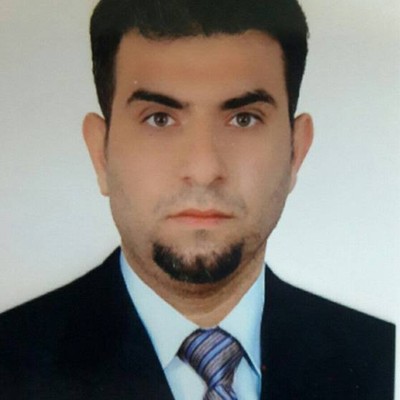
Name: Saif Ali Hussein Ali, born on May 23, 1987
Residence address: Al-Najaf Al-Ashraf / Al-Resala neighborhood. Marital status: Married
Number of children: 1
Academic biography:
1- Holds a bachelor's degree for the academic year 2010-2011 for the first batch
2- Holds a master's degree for the academic year 2016-2017 in physical education and sports sciences - University of Kufa, first batch as well. The title of the thesis was (An analytic Study of the Bio-kinematics variables of serve various readiness stance and their relationship with tennis players' accuracy and speed )3- He holds a PhD for the year 2021-2022 in the Philosophy of Physical Education from the College of Physical Education and Sports Sciences - University of Babylon, with a specialization in (sports training / racket games), and the title of the thesis was (The effect of qualitative exercises with an assistive device in developing the speed of the motor response and some the Bio-kinematics variables and the accuracy of performing the front and back the volley strike in tennis for advanced players).Scientific and practical experience:
1- An external lecturer for teaching tennis at the College of Physical Education and Sports Sciences - University of Kufa from 2016 to 2021.
2- The first coach of the Union in the tennis game of the Union of Najaf, from 2011 until now.
2- Former player of Al-Kufa Club in tennis.
3- The player of the University of Kufa team in racket games (ground tennis, table tennis, and badminton) and holds various positions. He also holds the title of best player in the Iraqi universities team championship in table tennis for the year 2011.4- I work as a daily wage worker at the College of Law / University of Kufa from 9/19/2012 to 5/31/2018 in the evening shift.
Degrees :
1- He obtained a certificate of participation in the international training course (Level One) in 2012.
2- Obtaining a certificate of appreciation from the Iraqi Central Tennis Federation, the Coaches Committee, in appreciation of the great efforts and distinguished giving to participate in (Level One) in 2012.
3- Obtained an arbitration training certificate in table tennis in 2017.
4- Obtaining a certificate of participation in attending an international ITF workshop held by the Iraqi Central Federation in 2016.
5- Received a Certificate of Appreciation from the President of the University of Kufa, appreciating the success of the Iraqi Universities Championship, which was held at the University of Kufa in 2010.6- Obtaining a certificate of appreciation from the member of the House of Representatives, Professor (Abdul Hussein Abtan), for our graduation from the first cycle of graduates of the Faculty of Physical Education and Sports Sciences in 2011-2012.
7- I received a certificate of appreciation from the President of the University of Kufa, appreciating my second place in the tennis competition during the Iraqi Universities Championship in 2016.
8- Holds a certificate of computer and English proficiency from the Informatics Research and Training Center / University of Kufa in 2017 with a passing degree.
9- Holds a teaching methods certificate from Al-Furat Al-Awsat University in 2018.
10- She worked as Director of the Student Activities Division at Al-Kafeel University from 9/19/2017 to 3/1/2020.
11- Obtaining a certificate of passing the validity test for teaching in 2023.

Research Interests

1

Publications

5
2025

An analytical study of some biokinematic variables of the forehand volley skill in tennis and its relationship to the speed of learning the forehand volley skill in padel for players

Authors. Saif Ali Hussein, Mohammed Ali Hussein.Layth Falih Kadhim
JournalInternational Journal of Yogic, Human Movement and Sports Sciences
Date2025-10-17
Abstract

Abstract The purpose of this paper is to identify the values ​​of some biokinematic variables of the forehand volley in tennis and padel, as well as to identify some biokinematic variables of the tennis forehand volley skill and their relationship to the speed of learning the forehand volley skill in padel. The researchers hypothesized that there is a correlation between some biokinematic variables of the tennis forehand volley skill and their relationship to the speed of learning the forehand volley skill in padel. The researchers used the descriptive approach due to its suitability to the nature and problem of the research. They selected the most important biokinematic variables under investigation in the performance of the forehand volley skill in tennis and padel. The researchers reached the most important results: a significant correlation between some biomechanical variables of tennis and padel for the forehand volley skill, as well as a correlation between some biokinematic variables of the tennis forehand volley skill and the speed of learning the forehand volley skill in padel.

2025

The effect of special exercises using auxiliary tools according to mechanical principles on students' learning of the forehand stroke skill in tennis

AuthorsSaif Ali Hussein, Dhelal Takleef Hasan.Shaymaaa Ali Abd Al Ameer
JournalInternational Journal of Yogic, Human Movement and Sports Sciences
Date2025-10-20
Abstract

The purpose of this paper is to designing assistive devices based on mechanical principles, developing specific exercises based on mechanical principles for the forehand stroke learning process, and identifying the values ​​of some kinematic variables of the forehand stroke. The researchers used the experimental method because it suited the nature of the problem. The researchers identified the research community as third-year students at the University of Kufa, College of Physical Education and Sports Sciences, consisting of two sections (A, B), numbering (60) students, with (30) students for each section. A sample of (12) students was selected from each section using a simple random method (lottery) to represent the research sample. Thus, the sample percentage was (40%) of the research community. Section (A) represented the experimental group, and Section (B) represented the control group. One of the most important results reached by the researcher is that: Exercises using assistive devices, based on mechanical principles, contributed to the development of tennis forehand skill, as they included the use of learning auxiliary tools. One of the most important recommendations recommended by the researchers is that: The necessity of using assistive devices based on mechanical principles in teaching curricula for teaching tennis skill performance.

2025

Some biokinematic variables and their relationship to the accuracy of the forehand and backhand skills in tennis for students

AuthorsSaif Ali Hussein
JournalInternational Journal of Physiology, Sports and Physical Education
Date2025-10-04
Abstract

The purpose of this paper is to identify some biokinematic variables related to the elbow joint angle at the moment of striking, the height of the starting point at the moment of striking, the angle of the starting point at the moment of striking, the height of the center of body mass at the moment of striking, and the ball's launch velocity at the moment of striking, as well as their relationship to the accuracy of students' forehand and backhand strokes. The researcher used the descriptive-analytical approach due to its suitability to the nature of the research. The research sample included (24) third-year students from the University of Kufa, College of Physical Education and Sports Sciences. Variables were extracted using the Kinovea program. After presenting, analyzing, and discussing the results, the researcher reached the following conclusions: There is a significant correlation between the variables of the elbow joint angle at the moment of striking and accuracy in the forehand stroke, there is a significant correlation between the height of the starting point at the moment of striking and accuracy in the forehand stroke, and there is a significant correlation between the variable of the ball's launch velocity at the moment of striking and accuracy in the forehand stroke. One of the most important recommendations recommended by the researchers is that: Emphasize increasing elbow extension to increase ball speed for forehand and backhand strokes, and emphasize hitting the ball at belt level to generate high speed and accuracy.

2022

The effect of qualitative exercises with an assistive device in developing the skill of flying strike for tennis players

AuthorsSaif Ali Hussein Ali, Prof. Dr Ali Jawad abed Al-imariProf. Dr. Sukaina kamel hamza
JournalTurkish Journal of Physiotherapy and Rehabilitation; 32(3)ISSN 2651-4451 | e-ISSN 2651-446X
Date2022-07-12
Abstract

Abstract The use of various exercises and the involvement of sports equipment and tools in raising the capabilities and vital motor capabilities had a positive and economic impact in improving the athlete's efficiency to reach higher levels related to learning and training, as it diagnoses and compares movements because it depends on accurate measurement to show the technical details of performance in its correct form, through the experience of researchers being Tennis specialists, as well as following many official matches inside and outside Iraq, note that there is an apparent slowdown in reaching the ball in time in the skill of the shot, which leads to losing many points and thus losing the match. The researcher believes that the reason for this is that the majority of coaches do not use innovative modern equipment during their training for that skill, in addition to the lack of sufficient focus on developing the flying strike skill, which makes the player play in the backline and not climb into the net to avoid losing the point, allowing the player to the opponent returns the ball without any difficulty. The research objectives were to prepare qualitative exercises with a device designed to develop flying strikes and identify the effect of qualitative exercises with a device designed to develop the flying strike in tennis

2021

The effect of qualitative exercises with an assistive device in developing the speed of the motor response of tennis playersLecturer. Saif Ali Hussein Ali

AuthorsLecturer. Saif Ali Hussein Ali, Prof. Dr Ali Jawad abed Al-imariProf. Dr. Sukaina kamel hamza
JournalTurkish Journal of Physiotherapy and Rehabilitation; 32(3)ISSN 2651-4451 | e-ISSN 2651-446X
Date2021-12-31
Abstract

Abstract: The use of various exercises and the involvement of sports equipment and tools in raising the bio-kinetic capabilities and capabilities had a positive and economic impact on improving the athlete’s efficiency to reach higher levels. It is related to learning and training as it diagnoses and compares movements because it adopts accurate measurement to show the technical details of performance in its proper form. Through the researcher’s experience being one of the tennis players and a coach now, as well as observing many official matches inside and outside Iraq, he noticed that there is an apparent slowness in reaching the ball at the right time in the skill of volley, which leads to losing many points and thus losing the match. The researcher believes The reason for this is that the majority of coaches do not use innovative modern equipment during their training for that skill, in addition to that, the lack of sufficient focus on the speed of the motor response to reach the ball in the right time, which makes the player play in the backline and not climb into the net to avoid losing the point, which allows the opposing player to return the ball without any difficulty. The research objectives were to prepare qualitative exercises with a device designed to develop the speed of the motor response and to identify the effect of qualitative exercises with a device designed to develop the speed of the motor response. Conclusions: The researchers concluded that there is an effect of the exercises accompanying the proposed device in developing the speed of the motor response for tennis players, that the proposed device helps in the process of measuring the speed of the motor response and helps in training to develop the speed of the motor response

Lectures

11
View details