مواقع التدريسيينجامعة الكوفة
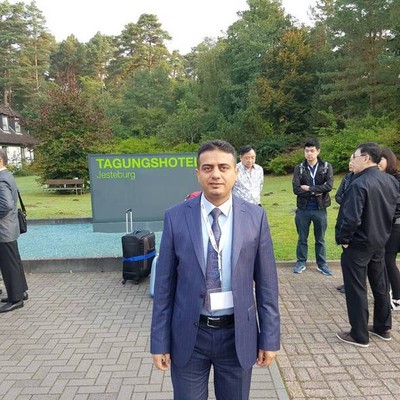
محمد جواد كاظم العبدالله
أستاذ مساعد

محمد جواد كاظم العبدالله

English Version
0بحث منشور
0محاضرة

الملف الشخصي

الدكتور محمد جواد كاظم العبداللة
الديوانية 3/7/ 1979
متزوج ولي طفلان
السكن النجف الاشرف حي العدالة
خريج كلية الطب جامعة القادسية الدفعة الأولى التسلسل التاسع
بكالوريوس طب وجراحة عامة 2003
تاريخ التعين 6 \1\2004
الإقامة الدورية في مستشفى الديوانية التعليمي
أكملت الدراسات العليا في مركز البورد العربي في النجف الاشرف
شهادة البورد العربي (دكتوراه) الأمراض الجلدية والتناسلية 25\8\2012
حاصل على دورة تدريب في زراعة الشعر الطبيعي والدائم من تركيا2013
حاصل على دورة تدريب لعلاج الأمراض الجلدية بالليزر2014
مشارك في المؤتمر العلمي للأمراض الجلدية والتناسلية في النجف الاشرف2006
مشارك في المؤتمر العلمي للأمراض الجلدية والتناسلية في النجف الاشرف2011
مشارك في المؤتمر العلمي للأمراض الجلدية والتناسلية في لبنان 2012
متحدث في المؤتمر العلمي للجمعية العراقية للأمراض الجلدية والتناسلية في بغداد
2013
متحدث في المؤتمر الطبي الثالث لمدينة الصدر الطبية في النجف الاشرف 2013
حصلت على لقب مدرس 2013
نقل ملاك من كلية الطب جامعة القادسية الى كلية الطب جامعة الكوفة 2015
مشارك في المؤتمر العلمي للأمراض الجلدية والتناسلية في اربيل 2015
مشارك في المؤتمر العلمي للأمراض الجلدية والتناسلية في النجف الاشرف 2016
مشارك في المؤتمر العلمي للأمراض الجلدية والتناسلية في دبي 2016

عضوا في مناقشة طلبة البورد العربي للامراض الجلدية والتناسلية الدورة 2014 .2015, 2016
متحدث في المؤتمر الطبي الرابع في كلية الطب جامعة القادسية 2016
شهادة تدريب لشد البشرة بواسطة الخيوط الذهبية في لبنان 2015
بحث مشترك منشور في مجلة عالمية للتجميل والعلاج بليزر 2015
مناقشة طلبة ابورد العربي 26|2|2018
كتاب شكر من الوزيرعددق\4\6\ 4522 20\3\ 2018
كتاب شكر من رىس الجامعة 20791 18 \10\2017

البحوث المنشورة

6
2022

ntense pulsed light versus benzoyl peroxide

الباحثونMohammad J Al Abdullah، Yasameen Gheni Mahdi 2
المجلة J Popul Ther Clin Pharmacol.
مختصر البحث

he intense pulsed light (IPL) therapy has three mechanisms of action in acne vulgaris: photochemical, photoimmunological, and photothermal. In this clinical trial, 47 patients with facial inflammatory acne lesions, ages ranging from 15 to 40 years, were enrolled. Patients were categorized into two groups: (a) 20 patients in Group A treated with IPL for 3 sessions, 3 weeks apart, (b) and 27 patients in Group B treated with benzoyl peroxide (BPO) 2.5% gel daily at night for 9 weeks. Follow up was done at 3 weeks after the end of treatment. The effect of treatment was evaluated objectively according to total lesion counting and digital photographic assessment and subjectively according to the patients' satisfaction. IPL is an effective and well-tolerated method for the treatment of inflammatory facial acne like BPO. Therefore, the IPL can be used as a standard therapy for inflammatory acne vulgaris.

2019

he Effect of 1540-nm Fractional Erbium-Glass Laser in the Treatment of Androgenic Alopecia

الباحثونAlhattab MK,، Al Abdullah MJ, Al-Janabi MH, Aljanaby WA, Alwakeel HA.
المجلةJ Cosmet Dermatol. 2020 Apr;19(4):878-883. doi: 10.1111/jocd.13122. Epub 2019 Sep 16.
مختصر البحث

Abstract Background: Androgenic alopecia is common, chronic dermatologic disorder. A variety of lasers and light sources appear to be safe and effective in the treatment of AGA. Aims: To evaluate the efficacy and safety of 1540-nm fractional erbium glass laser in the treatment of AGA. Patients/methods: This was an interventional therapeutic study for the treatment of patients with AGA. The patients received 10 sessions with 1540-nm fractional erbium glass laser at 2-week intervals. The assessment of the response was done before and at the end of follow-up period, both objectively (the change in the density of terminal hair and the diameter of the hair shaft) and subjectively (patient satisfaction). Any adverse effects were documented during the study. Results: Forty-seven out of 51 patients completed the study. After 5 months of laser treatment, the density of hair and hair thickness was significantly increased in both males and females (P value .001). Conclusion: The 1540-nm fractional erbium-glass laser seems to be an effective and safe option for treatment of patients with AGA. The improvement was accomplished in a short period. Keywords: 1540 nm; androgenic alopecia; erbium-glass; fractional; laser.

2019

Follicular Unit Extraction Hair Transplant (FUE) For Treatment of Androgenetic Alopecia in Al Najaf City.

الباحثونDr. Mohammad J. AL Abdullah، Dr. Murtadha Hashim Al-Janabi
المجلةKUFA JOURNAL FOR NURSING SCIENCES
مختصر البحث

Abstract: Background: This study was done to treat patients with androgenetic alopecia by using a new procedure, follicular unit extraction. Aim of study: To evaluate the efficacy and safety of Follicular Unit Extraction Hair Transplant in the treatment of androgenic alopecia patients Methodology: The consultation establishes whether the patient is a candidate or not for hair transplantation. A complete history, including the age of onset, previous hair transplants, and scalp surgeries as well as scar formation, also medical, smoking, family and hair loss history were obtained. These patients were followed up to look for the time period of initiation of hair growth, the growth achieved at the end of 3–6 months and any adverse events. The results of patients with noticeable improvement in the photographs and patient satisfaction were recorded at 3&6 months after the procedure. Results: Thirty-five patients were treated with this new procedure. The hair growth started after three months and density of hair increase after six months. Three patients (8%) developed postural hypotension immediately postoperative and improve by changing position. Slight pain and burning sensation at donor site were recorded in all patients and relieved by taking simple analgesia. Conclusion: This is a new procedure for treating hair loss in males with androgenic alopecia, that does not leave scars and it is appealing satisfied for both patient and doctor. Recommendations: we recommend the application of procedure for larger group of patients to assess their effectiveness.

2015

A split-face comparison of facial hair removal with the long-pulsed alexandrite laser and intense pulsed light system

الباحثونAl-Dhalimi MA، Kadhum MJ.
المجلةJ Cosmet Laser Ther
مختصر البحث

BACKGROUND: Undesirable hair growth presents a significant problem for many patients. Photoepilation has become a very popular procedure in esthetic and cosmetic practice. Among the systems used are the long-pulsed alexandrite laser (755 nm) (ALX) and intense pulsed light (IPL). OBJECTIVE: To compare the safety and efficacy of long-pulsed ALX and IPL for hair removal. PATIENTS AND METHODS: This comparative study was carried out in the outpatient Department of Dermatology and Venereology, Al-Sadir Teaching Hospital, Al Najaf City during the period from June 2009 to July 2010. Thirty-five patients were included; thirty of them completed the study. They received six treatment sessions with the ALX on the left side of the face and IPL on the right side of face with 4-week intervals between sessions. Response to treatment on both sides of the face was assessed at 1, 3, and 6 treatment sessions. Hair-free intervals and patient's satisfaction were recorded in each visit. RESULTS: After six treatment sessions, IPL-treated sides showed longer median hair-free intervals compared with ALX-treated sides. Reduction in hair counts was significantly larger on the IPL compared with that on the ALX-treated sides at 1, 3, and 6 sessions. Three patients (10%) developed postinflammatory hyperpigmentation, one of them on the left side and the others on the right side. It was more severe on the right side and both the patients were of skin type IV. Slight stinging and burning sensation at time of the treatment were recorded in all patients. All reported side effects were transient and tolerated by the patients except postinflammatory hyperpigmentation which persisted and was decreasing gradually toward the end of the study. CONCLUSIONS: The results of this study suggested that IPL is more effective in reducing excessive facial hair growth, with longer hair-free intervals and greater patient satisfaction than the ALX. KEYWORDS: IPL; hirsutism; long-pulsed alexandrite laser

2014

Original Paper Association between psoriasis and hepatitis B and C

الباحثونMohammed Younus Naji1 ,، Ala'a Abdulhussain Abdulzahra* 2 , Mohammed Jawad kadhum3
المجلةKarbala J. Med.
مختصر البحث

Objectives: The aim of study is to assess the association between patients with psoriasis and hepatitis B and/or C. Methods: This case control study that enrolled total 110 patients with psoriasis were included in the study, 63 males and 47 females and their age range from 15 to 70 years old , with male to female ratio 1.4 :1 . The study was conducted in Al sader teaching hospital and Al Hakeem hospital in Al Najaf governorate during the period from January 2013 to February 2014. All recruited patients had their ages, gender and case histories recorded on an already prepared data sheet. All recruited patients and control groups had been subjected to that Hepatitis Bs antigen (HBsAg) and anti-hepatitis C antibodies (anti-HCV) were done using Enzyme-linked Immunosorbent Assay (ELISA) kits. Results: This study that enrolled total 110 patients were included, 63 males and 47 females and their age range from 15 to 70 years old , with male to female ratio 1.4 :1 . There were increased incidence of male patients with psoriasis 63(44.1%), but there were no statistically significant difference between studied patients and control groups, (p=0.5) . There were increased incidence of patients with psoriasis younger than 50 years, 70 (53.8%), statistically significant difference between studied patients and control groups, (p=0.007) . There were statistically significant difference between studied patients and control groups regarding smoking , 30 (33.3%), (p=0.003). There were increased incidence of seropositive for hepatitis C in patients with psoriasis .There were statistically significant difference between studied patients and control groups regarding hepatitis C 4 (16.7 %), (p=0.003). There were no statistically significant difference between studied patients and control groups regarding hepatitis B 1 (33.3%), (p=0.6) . Conclusions: This study support of an association between psoriasis and hepatitis C but not with hepatitis B. The predictors for psoriasis as risk factor in this study were male younger than 50 years with history of smoking with association with hepatitis C infection . Recommendation: Physicians who care for patients with psoriasis should be aware of this possible association and consider screening patients with psoriasis for hepatitis C infection. Key words: prevalence, Psoriasis, hepatitis B and C

المحاضرات

7
عرض التفاصيل