مواقع التدريسيينجامعة الكوفة
Enas Hussein Ali Aldaffay
Lecturer

Enas Hussein Ali Aldaffay

0Publications
0Lectures
0Interests
0News

About

Curriculum Vitae

1. Personal information

Full name: Enas Hussein Ali
Scientific name: Enas Hussein Ali
First name: Enas
Second name: Hussein
Last name: Ali
Sex: Female
Nationality: Iraqi
General field: Biotechnology
Specific field: Medical Biotechnology
email: [email protected]
research and work about Stem Cells

2. Education

* 2013 – 2018 the doctoral degree in human biology - stem cells from Faculty of Medicine at Justus Liebig University Giessen/ Giessen- Germany

* 2007 – 2010 Master of science from Department of Biotechnology - College of Science - Al-Nahrain University/ Baghdad- Iraq. Dissertation title: “In vivo and In vitro Antimicrobial Activity of Flower and Callus Extracts of Matricaria chamomilla L. in the Treatment of Experimentally - Induced Skin Infections in Mice”.
* 1996 – 1999 Bachelor of science from Department of Biotechnology - College of Science- Al-Nahrain University/ Baghdad- Iraq.

* 1990 - 1996 Secondary school (Alhamza & Alrabee sec. school) - Baghdad-Iraq.
 1985 - 1990 Primary school (Alshahama pri. school) - Baghdad-Iraq.

3. Job Experience:

 PhD candidate: In Justus-Liebig-Universität Gießen, title of thesis “Differential Effects of Silibinin on Cardiovascular Differentiation and Leukopoiesis of Mouse Embryonic Stem Cells” under supervision of Prof. Dr. Heinrich Sauer. (10.2013 - 07.2018).

 Assistant lecturer: in department of Biology, College of Science, University of Kufa.

4. Qualification
Extra curricular:

 Course of training methods in Kufa University (2011).

(2011) Course of computer in Kufa University.
 IC3 (Internet&Computing Certification
 Participation in work shop in the Egyptian Society for Experimental Biology, Egypt, Hurghada (2012).

 Germany language course (04.2013 - 09.2013).

 Credit points 184 hour (Physiology, Biochemistry) in Giessen University (2015, 2016, and 2017).

5. Conferences and congress:

I- Oral presentation:

 Jordan, University of Amman (2009). “Curing of mice skin infection using flower and callus extracts of chamomile”.

 Egypt, University of Cairo (2011). The 7th Annual International Conference of Egyptian Society for Experimental Biology. “Curing of mice skin infection using callus extracts of chamomile”.

 Egypt, University of Cairo (2017). The 13th Annual International Conference of Egyptian Society for Experimental Biology. “Stimulation of vasculogenesis from embryonic stem cells by the milk thistle compound Silibinin via the STAT3/Akt/eNOS axis”.

II- Poster Presentations

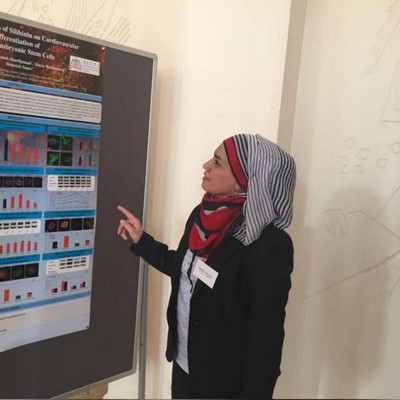
- Enas Hussein Ali, Fatemeh Sharifpanah, Maria Wartenberg, Heinrich Sauer. Differential Effects of Silibinin on Cardiovascular Differentiation of Mouse Embryonic Stem Cells. ECCPS Retreat 2016. Hotel Dolce Bad Nauheim 07th-08th July 2016. Germany.

- Enas Hussein Ali, Fatemeh Sharifpanah, Maria Wartenberg, Heinrich Sauer. Stimulation of Vasculogenesis from Embryonic Stem Cells by the Milk Thistle (Silybum marianum) Comound Silibinin. Joint International Meeting in Vascular Biology Sep 26, 2016 – Sep 28, 2016. Goethe University Hospital, Frankfurt. Germany.

- Enas Hussein Ali, Fatemeh Sharifpanah, Maria Wartenberg, Heinrich Sauer. Stimulation of vasculogenesis from embryonic stem cells by the milk thistle (Silybum marianum) compound Silibinin via the STAT3/Akt/eNOS axis. 96th Annual Meeting of the German Physiology Society 16-18 March 2017. Germany. Abstract published in Acta Physiol (Oxf). Mar; 219 Suppl 711: 1-167. doi: 10.1111/apha.12864.

- Enas Hussein Ali, Fatemeh Sharifpanah, Maria Wartenberg, Heinrich Sauer. Stimulation of vasculogenesis from embryonic stem cells by the milk thistle (Silybum marianum) compound Silibinin via the STAT3/PI3-K/AKT axis and generation of nitric oxide. ECCPS Symposium Posterpresentation-Area Cellular Plasticity and Heterogeneity. 7th-8th June, 2017. Bad Nauheim. Germany.
6. Publications
- Enas H. Ali, Kadhim M. Ibrahim, Munira Ch. Ismail. (2011). Curing of mice skin infections using ethanol flower extract of chamomile. Baghdad Science Journal. 8(1): 500-508.

- Ali E. Hussein, Ibrahim K. Mohammad, Ismail M. Chaloob. (2011). Antimicrobial activity of callus extra derived from Chamomilla recutita L. seedlings and their role in curing induced skin wound infection in mice. Egypt. J. Exp. Biol. (Bot.), 7(2): 197 – 202.

- Ali E H, Sharifpanah F, Wartenberg M, Sauer H. (2018). Silibinin from Silybum marianum stimulates embryonic stem cell vascular differentiation via the STAT3/PI3-K/AKT axis and nitric oxide. Planta Med. 84(11): 768-778.

- Ali E H, Sharifpanah F, Tsang SY, Wartenberg M, Sauer H. (2018). The milk thistle (Silybum marianum) compound silibinin inhibits cardiomyogenesis of embryonic stem cells by interfering with angiotensin II signaling. Stem Cells Int. 2018; 2018: 9215792. doi: 10.1155/2018/9215792.

- Sharifpanah F, Ali E H, Wartenberg M, Sauer H. (2019). The milk thistle (Silybum marianum) compound Silibinin stimulates leukopoiesis from mouse embryonic stem cells. Phytotherapy Res., 33(2): (452-460).

Research Interests

4

Publications

8
2022

Effect of Smoking on Low-Density Lipoproteins Level in Human

AuthorsHussein Ali, E, Hussein Abod Al-Khafaji, K Hassan Abood, A
JournalArchives of Razi Institute
Abstract

Abstract Smoking destroys the vascular system, increases plaque deposits in atherosclerosis, and increases inflammation. The present study was performed to determine the effect of smoking on the levels of low-density lipoprotein and very low-density lipoprotein in smokers. A cross-control study was carried out in the outpatient clinic in Baghdad, Iraq. The study was carried out 60 by individuals from February 2021 to July 2021. Participants in this study included adult smokers and non-smokers of both genders, and the levels of LDL and VLDL were determined using an Automatic Chemistry Analyze. The results revealed that the total number of smokers was 60 individuals from both genders; there was a significant difference in mean low-density lipoprotein and very low-density lipoprotein levels. There is a significant difference in LDL Values between non-smokers and smokers (129.853±7.880; P<0.05). Non-smokers showed lower LDL values (104.460±7.950; P<0.05). Regarding VLDL values, results revealed that smokers were showing higher values than a non-smoker (49.641±4.02), (28.986±1.676) respectively, P<0.05). LDL and VLDL levels are more prevalent in current cigarette smokers than in non-smokers. Heavy smokers have higher LDL and VLDL values for a cigarette than non-smokers, which is consistent with observations in other populations. Keywords: Lipid profile, LDL, VLDL, Cigarette smoking

2022

A review study of researches conducted on diabetes mellitus type 2 patients in Iraq

AuthorsEnas Hussein Ali, Khamaal Hussein Abod Al-Khafaji Ali Hassan Abood
JournalAl-Kufa University Journal for Biology / VOL.14 / NO.3 / Year: 2022
Abstract

Abstract Type 2 diabetes mellitus (DM) is a persistent metabolic condition illness with a rapidly rising prevalence in the entire world. The management of T2DM varies greatly across the government and industry sectors in Iraq; Using this variant brought on by unequal access to treatment. The goal of this agreement is to present uniform advice about the process of treat patients with T2DM for the initial time. while taking into account regional challenges in Iraq. A group of Iraqi internists and diabetologists from throughout the nation gave their approval to these consensus statements. The recommendation was based entirely on the most recent and current level of evidence. T2DM makes up about 90% of all diabetes cases. As a result of the reduced insulin response in T2DM, This condition is referred to as insulin resistance. In this condition, To keep glycemic control, insulin is ineffectual, which is first countered by an elevation in the synthesis of insulin; however, over time, the secretion of insulin falls, which results in T2DM.

2022

Review of studies that deal with the Physiological effects of pesticides on some animals in Iraq

AuthorsEnas Hussein Ali, Khamaal Hussein Abod Al-Khafaji Nagham Abdul Ghani Mohammad Ali Hassan Abood
JournalAl-Kufa University Journal for Biology / VOL.14 / NO.3 / Year: 2022
Abstract

Abstract All substances used to eliminate or manage pests are collectively referred to as "pesticides," including insecticides (insecticides), fungicides (fungi), and herbicides (weedicides). One of the main supporters of the green revolution sought ways to improve and utilized suitable pesticides to control the wide range of insect and plant pests that have a detrimental impact on the quantity and quality of the world's food supply. This review looks at pesticide categories, toxicity, deciding variables, pesticides in water supplies, contaminated soils, impacts on human health, and techniques for detection, removal, and repair. Furthermore, this essay contrasts the analytical techniques used to measure the very low concentrations of pesticides, as well as gives a concise overview of the separation procedures utilized for pesticide examination. Finally, our research suggests that new technologies for detecting pesticide residues and other very harmful pollutants be developed. Both severe, or simple, and persistent, or hard, unfavorable health effects can arise from the use of pesticides, and they can manifest months or years after administration. The goal of this project is to demonstrate the detrimental effects of chemical pesticides, as well as their repercussions on the environment and people's health in Iraq. We could conclude that incorrect use of these substances might be harmful in the short- or long-term. Governmental agencies in charge of these materials should pursue alternate control strategies to decrease the danger and abuse of these compounds. Taking into account that educating the public about the dangers of pesticides is a crucial part of preserving improved both the environment and health in Iraq, that might be better and have no adverse effect on health and the environment. Keywords: Pesticide, contamination, human influence.

2019

The milk thistle (Silybum marianum) compound Silibinin stimulates leukopoiesis from mouse embryonic stem cells

AuthorsFatemeh Sharifpanah , Enas Hussein Ali Maria Wartenberg Heinrich Sauer
JournalPhytother Research
Abstract

The milk thistle compound Silibinin (i.e., a 1:1 mixture of Silybin A and Silybin B) stimulates vasculogenesis of mouse embryonic stem (ES) cells. Because vasculogenesis and leukopoiesis are interrelated, the effect of Silibinin on leukopoiesis of ES cells was investigated. Treatment of differentiating ES cells with hydrosoluble Silibinin-C-2',3-dihydrogen succinate dose-dependent increased the number of CD18+ , CD45+ , and CD68+ cells, indicating leukocyte/macrophage differentiation. Silibinin treatment activated phosphoinositide 3-kinase (PI3K), AKT (protein kinase B), signal transducer and activator of transcription 3 (STAT3), stimulated hypoxia-induced factor-1α (HIF-1α), and vascular endothelial growth factor receptor 2 (VEGFR2) expression and raised intracellular nitric oxide (NO). Western blot experiments showed that upon coincubation with either the PI3K inhibitor LY294002, the STAT3 inhibitor Stattic, the AKT antagonist AKT inhibitor VIII, or the NO inhibitor L-NAME, the Silibinin-induced expression of CD18, CD45, and CD68 was abolished. Moreover, the stimulation of HIF-1α and VEGFR2 expression was blunted upon STAT3 and PI3K/AKT inhibition. Treatment of differentiating ES cells with L-NAME abolished the stimulation of VEGFR2 and VE-cadherin expression achieved with Silibinin, indicating that NO is involved in vasculogenesis and leukocyte differentiation pathways. In summary, the data of the present study demonstrate that Silibinin stimulates leukocyte differentiation of ES cells, which is associated to vasculogenesis and regulated by PI3K/AKT-, STAT3-, and NO-mediated signaling.

2018

Silibinin from Silybum marianum Stimulates Embryonic Stem Cell Vascular Differentiation via the STAT3/PI3-K/AKT Axis and Nitric Oxide

AuthorsEnas Hussein Ali, Sharifpanah F Wartenberg M Sauer H
JournalPlanta Medica
Abstract

Abstract Silibinin, the bioactive compound of milk thistle (Silybum marianum), exerts tissue protective and regenerative effects that may include stem cell differentiation toward vascular cells. The purpose of the present study was to investigate whether silibinin stimulates blood vessel formation from mouse embryonic stem (ES) cells and to unravel the underlying signaling cascade. Vascular branching points were assessed by confocal laser scanning microscopy and computer-assisted image analysis of CD31-positive cell structures. Protein expression of vascular markers and activation of protein kinases were determined by western blot. Nitric oxide (NO) generation was investigated by use of the fluorescent dye 4-amino-5-methylamino-2',7'-difluorofluorescein diacetate. Silibinin dose-dependently increased CD31-positive vascular branching points in embryoid bodies cultivated from ES cells. This was paralleled by increase of protein expression levels for the endothelial-specific markers vascular endothelial cadherin (VE-cadherin), vascular endothelial growth factor receptor 2, and hypoxia-inducible factor-1α. Moreover, silibinin increased activation of endothelial nitric oxide synthase (eNOS), which boosted generation of NO in embryoid bodies and enhanced phosphorylation of signal transducer and activator of transcription 3 (STAT3) as well as phosphoinositide 3-kinase (PI3-K) and AKT. Vasculogenesis, VE-cadherin expression, STAT3 and AKT phosphorylation, NO generation, and eNOS phosphorylation were inhibited by the small molecule STAT3 inhibitor Stattic, AKT inhibitor VIII, the PI3-K inhibitor LY294002, or the NOS inhibitor Nω-Nitro-L-arginine methyl ester hydrochloride. In conclusion, our findings indicate that silibinin induces vasculogenesis of ES cells via activation of STAT3, PI3-K, and AKT, which regulate NO generation by eNOS.

2018

The Milk Thistle (Silybum marianum) Compound Silibinin Inhibits Cardiomyogenesis of Embryonic Stem Cells by Interfering with Angiotensin II Signaling

AuthorsEnas Hussein Ali, Fatemeh Sharifpanah Amer Taha Suk Ying Tsang Maria Wartenberg Heinrich Sauer
JournalStem Cells International
Abstract

Abstract The milk thistle (Silybum marianum (L.) Gaertn.) compound silibinin may be an inhibitor of the angiotensin II type 1 (AT1) receptor which is expressed in differentiating embryonic stem (ES) cells and is involved in the regulation of cardiomyogenesis. In the present study, it was demonstrated that silibinin treatment decreased the number of spontaneously contracting cardiac foci and cardiac cell areas differentiated from ES cells as well as contraction frequency and frequency of calcium (Ca2+) spiking. In contrast, angiotensin II (Ang II) treatment stimulated cardiomyogenesis as well as contraction and Ca2+ spiking frequency, which were abolished in the presence of silibinin. Intracellular Ca2+ transients elicited by Ang II in rat smooth muscle cells were not impaired upon silibinin treatment, excluding the possibility that the compound acted on the AT1 receptor. Ang II treatment activated extracellular signal-regulated kinase 1/2 (ERK1/2), c-Jun NH2-terminal kinase (JNK), and p38 mitogen-activated protein kinase (MAPK) pathways in embryoid bodies which were abolished upon silibinin pretreatment. In summary, our data suggest that silibinin inhibits cardiomyogenesis of ES cells by interfering with Ang II signaling downstream of the AT1 receptor.

2011

Curing of mice skin infections using ethanol flower extract of chamomile. Baghdad Science Journal. 8(1): 500-508.

AuthorsEnas Hussein Ali, Kadhim M. Ibrahim Munira Ch. Ismail
JournalBaghdad Science Journal
Abstract

Abstract This experiment was conducted in order to estimate azulene and apigenin in chamomile flowers. Ethanol extracts were examined singly or in combination with some drugs in their biological activity against some pathogens causing skin infection. Ethanol extract was applied at a concentration of 40 mg/ml for the treatment of induced skin infection of mice. Among the topicals used, Claforan was found the most effective on microorganisms causing skin diseases; ethanol extract was more effective than the drug Candimazole solution 1%. HPLC was used for the determination of azulene and apigenin active compounds of chamomile plant.

2011

ANTIMICROBIAL ACTIVITY OF CALLUS EXTRACTS DERIVED FROM CHAMOMILLA RECUTITA L. SEEDLINGS AND THEIR ROLE IN CURING INDUCED SKIN WOUND INFECTIONS IN MICE

AuthorsEnas Hussein Ali, Ibrahim K. Mohammad Ismail M. Chaloob.
Journal)Egypt. J. Exp. Biol. (Bot.
Abstract

Abstract This paper investigates the antimicrobial activity of Chamomilla recutita L. callus culture ethanol extract and its ability to cure induced skin wound infections in mice. Callus was initiated on Murashige and Skoog (MS) medium containing some combinations of BA and 2,4-D concentrations. Results indicated that 1 mg/l of Benzyl adenine (BA) combined with 0.1 mg/l of 2,4-Dichlorophenoxyacetic acid (2,4-D) initiated the highest callus of the plant. Ethanol callus extract exhibited antimicrobial activity against the studied microorganisms at the concentrations 20 and 40 mg/ml. Callus ethanol extract at the concentration 40 mg/ml was effective in the treatment of induced skin mice injury infected with Staphylococcus aureus. Callus ethanol extract was compared with the commonly used drug for skin infections (Cefotaxim sodium). A mixture of ethanol callus extract and Cefotaxime sodium at a percentage of 50% was the most effective treatment against St. aureus. Azulene and apigenin were estimated in the callus extract was suggested to be the main reason for callus extract cure of wound infections in mice.

Lectures

8

تقانة احيائية

تقانة احيائية

Practical physiology of microorganisms

فسلجة احياء مجهرية

Carbohydrate fermentation

Microbial physiology

Hydrogen Sulfide (H2S) Production Test

Microbial physiology

Indole Production Test

Microbial physiology

Activities of bacterial enzymes:

Microbial physiology

Gelatin Hydrolysis Test

Microbial physiology

Oxidase test

Microbial physiology

News & Announcements

2
News 2022-09-20

An introductory lecture will be given on the latest developments in stem cell research

An introductory lecture will be given on the latest developments in stem cell research

News 2019-09-22

Differential Effects of Silibinin on Cardiovascular & Leukocyte Differentiation of Mouse Embryonic Stem Cells

Silibinin stimulates vasculogenesis & leukopoiesis of ES cells through a NO-mediated and PI3K/AKT- as well as STAT3-regulated signaling pathway. On the other hand Silibinin prevents cardiomyogenesis through inhibition of the angiotensin-II signaling pathway on the level of ERK1/2, p38 & JNK signaling cascade.

View details