
مواقع التدريسيينجامعة الكوفة
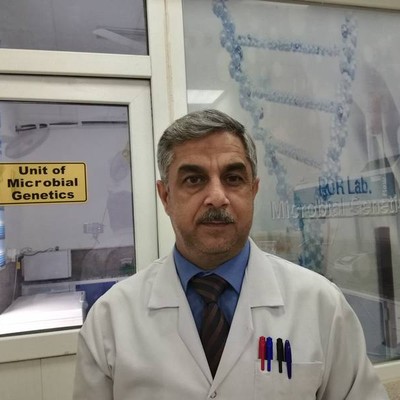
Asst. prof.Hussein Hameed Hassan AL-Turnachy
Assistant Professor

Asst. prof.Hussein Hameed Hassan AL-Turnachy

0Publications
0Lectures
0Interests
0News

About

• Name : Dr.Hussein Hameed Hassan Al-Turnchy.

• Nationality : Iraqi.

• Birth : Al-najaf Al-ashraf 14-3-1969.

• Adress: Al-najaf Al-ashraf / Assalam quarter.

• Language: Arabic/ English.

• Degree: MSc.

• General specialization: Biology.

• Fine specialization : Molecular genetics.

• Lectures in RT-qPCR technique in the Faculty of Education for girls/University of Kufa 2014.

• Member of the Faculty of Physical planning University of Kufa 2014.

• Advisory researcher in the Local Environmental Research Center / Babylon University 2003-2011.

• Technician in the lab. of Environmental Health /Collage of Engineering / Babilon university 1999-203.

• Lecturer of the Microbiology in the Kufa Institute for Medical Techniques 1997-1998.

• Technician in laboratory of the Airforce Hospital 1994-1995.

• Member of the Arab biologists committee 1992.

• Member of the Iraqi microbiologists committee 1992.

• Bsc biology/ Faculity of Science/ University of Mustansiriya 1991-1992.

Training course in Iraq:

• Training course on Real time PCR in the Faculity of Veterinary / University of Kufa (2013).

• Training course in "University Teaching Methods" 2014.

• Training course in IC3 (2010).

• Training course in computer techniques (2000).

• Training course in Advanced Jet Management (AJM) (2004).

Internatunal Published Articles:

1. Biosynthesis of Silver Nanoparticles by Punica Granatum Peel Extract and their Biological
Activity on different Pathogenic Bacteria ( https://doi.org/10.14704/nq.2021.19.9.nq21135)

2. Impact of some Environmental Factors on the Activity of Zinc Oxide Nanoparticles fabricated by Bacillus subtilis (https://portal.issn.org/resource/ISSN/0975-4415).

3. Comparative of silver and gold nanoparticles synthesized by the chemical reduction method for antimicrobial applications (https://doi.org/10.1063/5.0027430).

4. Isolation of metallic Klebsiella Pneumoniae HHHF1 potent for AgNPs nanobiosynthesis from iron-rich soil samples (https://doi.org/10.1063/5.0027733).

5. CHARACTERIZATION AND OPTIMIZATION OF AgNPs BIOSYNTHESIS BY KLEBSIELLA PNEUMONIAE HHHS1 ISOLATED FROM SILVER RICH ENVIRONMENT (https://portal.issn.org/resource/ISSN/0976-1772).

Other scientific activities:

1- Reviewer for the Journal of Nanobiotechnology and Nanosciences
(Q1, Springer-Nature).

2- Reviewer for the journal of BACB(Q2, Springer-Nature).

• MSc thesis:" Assessment of UGT1A1 gene expression in hyperbilirubinemic neonates".

• The role of gender in UGT1A1 gene expression in hyperbilirubinemic neonates.(published)medical journal of Kerbela 2014.

• Assessment of antimicrobial activity of( hibiscus sabdrifa L.) extract on the G+ and G- bacteria. (published).journal of science/ University of Babel 2000.

• Impact of air pollution on hypersensitivity patients in Hilla city during the year 2003.the ninth conference of University of Babel.2005.

• Impact of air pollution on hypersensitivity patients in the governorates of Karbala and Al-najaf Al-Ashraf during the year 2003. Research plan of LERC/ University of Babel 2006.

• Assessment of organic pollution of Euphrates river in Kufa city. journal of science/ university of babel 2001.

• A questionnaire study for the smoking and passive smoking in Hilla city.

• Impact of some of exhaust pollutants of domestic electric generators on general health in Al- Mortadha Quarter in Hilla city.conference of the University of Quadisiya.

• Assessment of biogas production by different types of animal wastes. Annual research plan of LERC/ University of Babel.

• In vitro evaluation of anti cariogenic phage cocktail use in oral hygiene. Annual research plan of LERC/ University of Babel.

Symposia:

• Impact of electric generators exhaust on public helth (University of Quadisiya).

• Techniques of water purification. Lecture in genotoxins (University of Babil).

• Bacteriophages as alternative therapy for antibiotics (University of Kufa).

• Bacteriophages is natural sustainable resource (University of Babil).

Conferences:

• First conference for environmental researches. (University of Babil).

• Second conference for environmental researches. (University of Quadisiya).

• The ninth conference of university of babil. (university of Babil).

• National conference of the research centers of the ministry of higher education and scientific research ( university of Kufa).

Certificates: (4)

Acknowledgments:

• Minister of higher education and scientific research (6).

• Principal of university of kufa (6).

• Principal of University of Babil: (7).

• Vice principal of University of Babil: (2).

• Faculty deans: (6).

• Head of department: (1).

• Governor of Babil: (2).

• Governor of Al-Najaf Al-Ashraf: (1).

• Head of the research center: (2).

Publications:

• Monthly bulletin of local environmental research center.

• "Bird's flue understanding, prevention and self treatment".

Responsibilities:

• Vice manager of the biological resources dept./ LERC/ university of Babil.

• Organizer for scientific affairs and conferences in LERC / university of Babil.

• Director of Inventory property /University Babel 2006.

• Board warden of the Faculty of Physical planning.

Research Interests

4

Publications

4
2026

Prevalence of integron class 1, 2, 3 among multidrug - Resistant Pseudomonas aeruginosa

AuthorsZena T. Wtwt, Hussein H. Al-Turnachy
Journal AIP Conference Proceedings 2026
Date2026-05-21
Abstract

Multi drug-resistant bacteria have recently arisen increasingly in the arena, creating significant challenges in the treatment of bacterial infections worldwide. Pseudomonas aeruginosa, the clinically significant bacterium causes nosocomial infections. This study aimed to screen out class 1, 2, and 3 integrons among multi drug resistance Pseudomonas aeruginosa infections. This study selectively targetted Pseudomonas aeruginosa in clinical specimens identified primarily by conventional biochemical tests between December 2023 and March 2024. confirm identification and analyze the antibiotic resistance patterns of these bacteria by using the VITEK 2 Compact system. Mobile resistance genes were screened using intI1, intI2, and intI3 gene-specific primers and conventional PCR. The current study included the collection of 150 clinical specimens from patients suffering from (burns, diabetic foot ulcer, and wound infections) and the findings based on phenotyping characterization by using, nutrient, blood, Macconky agar media, then selective media cetrmide agar seplemented with nalidixic acid to improve selectivity isolation, biochemical tested, final identification to Pseudomonas aeruginosa isolates done by automatic VTEK-2 compact device which included 64 biochemical checks on Gram-negative-ID cards showed that only 25.3% (38/150) belong to Pseudomonas aeruginosa, where 60 % (90/150) gave other bacterial growth and 14.6% (22/150) no bacterial growth. Antimicrobial susceptibility test was performed on 38 Pseudomonas aeruginosa clinical isolates to evaluate minimum inhibitary concentration (MIC) levels according to clinical and laboratory standards institute (CLSI) guide 2024 by Viteck 2 compact system AST-GN76 (Pseudomonas aeruginosa) cards and software version 5.01 to know the susceptibility of 38 Pseudomonas aeruginosa to various antibacterials agents revealed that these isolates had resistance rate to norfloxacin 65.78% (25/38), ciprofloxacin 39.47%(15/38), meropenem 28.94%(11/38), imipenem 60.52%(23/38), gentamycin 92.10%(35/38), amikacin 100%(38/38), ceftazidime 89.4%(34/38), cefepime 86.84%(33/38 ) and cefotaxime 84.21(32/38) and observed 5 (13.15%) were multidrug resistance Pseudomonas aeruginosa that are resistance to all antibiotic used in this study. polymerase chain reaction ( PCR) results in all 5 multi drug resistance Pseudomonas aeruginosa carried intgron class 1,2 and 3 gene 100 (5/5) whereas none of these isolates carried intI2,intI3 gene. Mobile multiple resistance genes are suggested as the influential player in the growing multiple resistance of P. aeruginosa. intI1gene was concluded as the putative contributor to the multiple antibiotic-resistant P. aeruginosa infections in healthcare organizations in the province of Babil.

2025

Synthesis of nano-liposomes containing Mentha piperita essential oil and investigating their stability, antimicrobial, antioxidant, and antiproliferative properties

AuthorsMohammad Majdizadeh, Hussein H Al-Turnachy 4 , Mahdie Hemati 5, 6, Milad Akhlaghi 6 , Fatemeh Haghiralsadat 6, 7*, Fatemeh Oroojalian 8, 9*
JournalJournal of Nanomedicin
Date2025-12-01
Abstract

Objective(s): Considering the problems of using medicinal plants in the treatment of diseases and the role of nanotechnology in reducing these challenges, the present research was conducted with the aim of preparing nano-liposomes containing Mentha piperita essential oil and investigating their physicochemical characteristics. Materials and Methods: Four nano-liposome formulations containing essential oil were prepared using cholesterol and phosphatidylcholine by thin layer method. Encapsulation efficiency, size, zeta potential, and essential oil release were measured in all formulations. The appropriate formulation was selected to investigate the morphology of the particles, their interaction between nano-liposomes and essential oil, toxicity, and antioxidant, antibacterial, and antifungal properties. Then, the stability of the selected formulation was checked for 120 days. Results: Formulation F1 was selected with an encapsulation efficiency of 62.12%, nano-particle size of 121 nm, and zeta potential of -21.8 mV. In this formulation, no interaction between nano-liposomes and essential oil was observed, and the spherical shape and two-layer nature of the nanoparticles were confirmed. Nanoliposomes with and without essential oil caused little toxicity to normal HFF cells and in all concentrations compared to free essential oil, they had more toxicity on MCF-7 cancer cells and higher antioxidant properties. The anti-proliferative effects of nano-liposomes on some microorganisms were higher than the free essential oil. Also, there were slight changes in some physicochemical properties of nanoparticles during 120 days. Conclusion: Considering the suitable physicochemical properties of nano-liposomes containing essential oil and their anti-proliferative effects, these nano-systems can be suggested for further research in the field of cancer and microbial diseases.

2018

Characterisation and optimization of AgNPsbiosynthesis by Klebsiella Pneumoniae HHHS1 isolated from silver rich environmenthttp

AuthorsDr. Hussein Hameed Hassan , Dr. NawfalHussein Aldujaili
JournalBIOCHEMICHAL AND CELLULAR ARCHIVES
Abstract

Silver rich soil samples were screened for the potent bacteria for AgNPs biosynthesis. Silver resistant bacteria are the potent for AgNPs biosynthesis. K. Pneumoniae strain HHHS1 was isolated and characterized using 16sRNA gene sequencing and VITEK-II, and used for extracellular synthesis of AgNPs by cell free supernatant of BHI culture media. Conditions of synthesis were optimized and biogenic AgNPs were characterized physically using SEM, EDS, AFM, and XRD, and biologically by examining for antibacterial, antibiofilm, and antioxidant activity. Sequencing of 16sRNA gene and distance tree analysis revealed that the isolated K.pneumoniae is a new strain submitted to the NCBI as HHHS1. SEM, EDS, AFM, and XRD analysis for biogenic AgNPs fabricated by this strain revealed spherical, monodispersed NPs with average size 21.9 nm. Optimum conditions of the synthesis environment were found: pH 8, 370C, 8h, substrate concentration was found proportional to AgNPs characteristic.

2014

Assessment of the Role of Gender in the Expression of UGT1A1 Gene in Hyperbilirubinemic Neonates

Authors Hussein Hameed Hassan, Dhaferah. J. A. AL-Fatlawi2 , Sabah N. AL-Fatlawi3
JournalKerbala Jorunal of Medicine
Abstract

Background: Neonatal jaundice (NJ) is a significant disease among neonates in Najaf province. It manifests 19% of the total deliveries and 50% of the inpatients, and affects about 60% of term and 80% of preterm neonates during the first week of life. UGT1A1 is a cause of concern in NJ, because it is the most important underlying cause of unconjugated hyperbilirubinemia. Methods: A cohort of 85neonate sorted into three groups according to the TSB level. Group 1 (TSB<5mg/dl), group 2 (TSB 5-15 mg/dl) and group 3 (TSB <15mg/l). UGT1A1expression and TSB level was assessed for both males and females in each group. Results & Discussion: Results showed high inverse correlation between UGT1A1expression and the ratio of males (r= -0.99, P<0.01), while females ratio expressed high direct correlation with UGT1A1 expression level with correlation coefficient of (r=0.99, P<0.01). This might due to physiological maturity differences of liver between both sexes, and the plasma growth hormone (GH) pulses frequencies (released by the pituitary gland) which affects the expression of liver enzymes. It's found that GH pulses are higher in females than in males. Conclusion: concluding that mean UGT1A1 expression level in females is more than that in the males during neonatal period therefore females are less vulnerable to NJ than males. Aim: The aim of this study is to qualify the UGT1A1 gene expression in both males and females therefore determining health and health care requirements. Keywords: Rule of gender in hyperbilirubinemia, Hyperbilirubinemia, Neonatal jaundice, UGT1A1 gene expression.

Lectures

24

مقدمة للاحياء المجهرية

علم النبات العام

علم الحياة العام

Electroporation

هندسة وراثية

تشخيص البكتيريا موجبة كرام

بكتيريا مرضية

Gene expression, Molecular cloning

Microbial genetics

الادوات والاجهزة (التعريف بالمخبر)

أحياء مجهرية 1

الناو تكنولوجي الحيوي

التقانة الحيوية

طرق التوصيف النانوي

تقنيات حيوية

العاثيات العلاجية

التقنيات الحيوية

التداخلات البروتينية-البروتينية

تقانة حيوية

التجمع الذاتي

تقنيات حياتية

السلامة والامن البايولوجي

أحياء مجهرية عام

تحضير الاوساط الزرعية

أحياء مجهرية عام

أستخدام الذكاء الاصطناعي في توصيف المواد النانوية

مشروع بحث

أستخدام الذكاء الاصطناعي في توصيف المواد النانوية

مشروع بحث

Introduction to Nanobiotechnology

Nanobiotechnology

X-Ray defraction (XRD)

Nanobiotechnology

Introduction to Bioinformatics

Bioinformatics

Primer designe

Bioinformatics

Bacteriophage therapy

Biotechnology

Post antibiotic era-Nanobiotechnology

Biotechnology

Protein-Protein interaction

Biotechnology

Nano-proteins and autoassembly

Biotechnology

Microbial Ghosts& zombies

Biotechnology

News & Announcements

2
News 2018-12-01

laptop charged by water

Japan released laptop charged by water with out the need to electricity. http://www.yankodesign.com/2011/07/14/oxygenated-notebook/

News 2017-03-30

genocopia

http://www.genecopoeia.com/product/search/index.php?prt=19&utm_source=GeneCopoeia&utm_medium=email&utm_campaign=PCRMix-20170314&utm_unique_id=6875737365696e5f68616d65656432303031407961686f6f2e636f6d

View details