
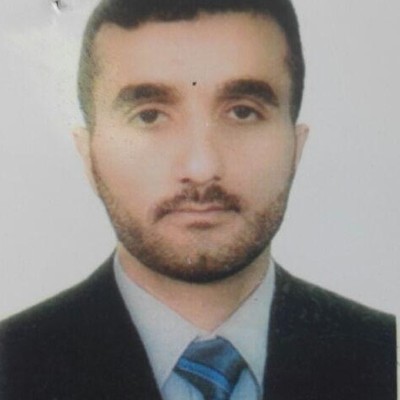
مواقع التدريسيينجامعة الكوفة
0Publications
0Lectures
0News

About

Academic Certifications
1. MS. in Biochemistry, Research Protein Center, University of Shahid Beheshti(2018).
2. BSc. in Chemistry, College of Science, University of Kufa (2010)
3. CSE. From Al- wehda Secondary School (2006).
Principal subjects/occupational skills covered:
• Analytical Chemistry
• Organic Chemistry
• Physical Chemistry
• Inorganic Chemistry
• Coordination Chemistry
• Quantum Chemistry and Spectra
• Industrial Chemistry
• Bio Chemistry
• Organic Identification
• Instrumental Analysis
• Organometalic Chemistry
• General Physics
• Geology
• Computers
• Mathematics
Work Experience
Dates (from – to) : 2011-Present

Name and address of position :
University of Kufa, Faculty of Science, Ecology Department, Najaf, IRAQ.

Occupation or position held : Assistant Chemist
Courses attended

- Course of Chemical treatments of contaminated water in college of Education for Girls- University of Kufa, Najaf, IRAQ.
- Course in polarography technique in Centeral Laboratory - University of Kufa, Najaf, IRAQ.
- Course in Gas Chromatography technique in Centeral Laboratory - University of Kufa, Najaf, IRAQ.
- Course in C.H.N.S technique in Centeral Laboratory - University of Kufa, Najaf, IRAQ.
- Trainee member in Iraqi Chemists Organization.
- Trainee member in Iraqi Nanotechnology Organization.

Publications

5
2021

Trace element, immune and opioid biomarkers of unstable angina, increased atherogenicity and insulin resistance: Results of machine learning

AuthorsHasan Abbas Qazmooz, Hasan Najah Smesam b, Rana Fadhil Mousa c, Hussein Kadhem Al-Hakeim d, Michael Maes
Journalelsevier
Abstract

Background: Aberrations in endothelial cells, immune and oxidative pathways are associated with atherosclerosis (ATS) and unstable angina (UA). The role of trace elements, minerals, and the endogenous opioid system (EOS) in UA are less well established. Methods: We measured lipid, insulin resistance (IR), and immune, trace element (copper and zinc), mineral (magnesium, calcium), EOS (β-endorphin and mu-opioid receptor (MOR)) and antioxidant (vitamin D3) biomarkers in patients with ATS (n = 60) and UA (n = 60) and healthy controls (n = 58). Results: ATS patients showed increased atherogenic and IR indices, IL-6, IL-10, β-endorphin, copper and magnesium, and lower zinc than healthy controls. Logistic regression showed that UA was significantly discriminated from ATS without UA with an accuracy of 85.5 % using calcium, IL-10, β-endorphin, MOR, triglycerides, IR (all positively), and copper and vitamin D3 (inversely). Neural networks showed that UA was discriminated from ATS without UA with an area under the ROC curve of 0.942 using MOR, β-endorphin, calcium, insulin resistance, vitamin D3 and copper as input variables. We found that 50.0 % of the variance in IR was explained by the regression on copper, IL-10, IL-6 (all positively), and zinc (inversely), while 32.9 % of the variance in the atherogenic index of plasma was explained by copper, IL-10 (both positively), and magnesium (inversely). Conclusion: UA is not only mediated by insulin resistance, atherogenicity, and immune disorders, but also by aberrations in the endogenous opioid system and trace elements as well as lowered antioxidant levels. Copper appears to play a key role in IR and atherogenicity

2021

A pathway phenotype linking metabolic, immune, oxidative, and opioid pathways with comorbid depression, atherosclerosis, and unstable angina

AuthorsRana Fadhil Mousa, Hasan Najah Smesam , Hasan Abbas Qazmooz , Hussein Kadhem Al-Hakeim and Michael Maes
JournalCambridge University Press
Abstract

Background There is strong comorbidity between atherosclerosis (ATS) and depression which is attributed to increased atherogenicity, insulin resistance (IR), and immune and oxidative stress. Aim of the study To examine the role of the above pathways and mu-opioid receptor (MOR), β-endorphin levels, zinc, copper, vitamin D3, calcium, and magnesium in depression due to ATS/unstable angina (UA). Methods Biomarkers were assayed in 58 controls and 120 ATS patients divided into those with moderate and severe depression according to the Beck Depression Inventory-II (BDI-II) scores >19 and >29, respectively. Results Neural network and logistic regression models showed that severe depression due to ATS/UA was best predicted by interleukin-6 (IL-6), UA, MOR, zinc, β-endorphin, calcium and magnesium, and that moderate depression was associated with IL-6, zinc, MOR, β-endorphin, UA, atherogenicity, IR, and calcium. Neural networks yielded a significant discrimination of severe and moderate depression with an area under the receiver operating curves of 0.831 and 0.931, respectively. Using Partial Least Squares path analysis, we found that 66.2% of the variance in a latent vector extracted from ATS/UA clinical features, and the BDI-II scores, atherogenicity, and IR could be explained by the regression on IL-6, IL-10, zinc, copper, calcium, MOR, and age. The BDI-II scores increased from controls to ATS to UA class III to UA class IV. Conclusions Immune activation, the endogenous opioid system, antioxidants, trace elements, and macrominerals modulate a common core shared by increased depressive symptoms, ATS, UA, atherogenicity, and IR.

2020

DETERMINATION OF HEAVY METAL IN SAMPLES OF TIRMANIA NIVEA FUNGI IN DIFFERENT SOILS

AuthorsHasan A.Qazmooz, Muthik A. Guda, Jaafar B. Algburi, Sadiq K.L. Al-Zurfi* and Thulfiqar Ali Al-Graiti
JournalPlant Archives Vol. 20
Abstract

Tirmania nivea (Desf.) Trappe,1971 has high commercial value. This study was aimed to assess the quality and suitability of Tirmania nivea for human use by determining their heavy metals content and susceptibility to heavy metals accumulation. Concentrations of lead (Pb), Cadmium (Cd), Chromium (Cr) and Nickel (Ni) were tested in different fungus samples grown in different soils of the semi-arid regions of Iraq. Heavy metals concentrations were found in range of level ordered from high to low Cr < Ni < Cd < Pd. The soil contents of cadmium were about five times and the firm was about one and a half times above the global scale (0.1 to 1) mg/kg, while Cr, Ni and Pb concentrations were lower than the reference ranges in the United States and Chinese soil (70, 20, 300) mg/kg respectively. Transfer factor from soil to the fruits was more than one except for Cr. The high transport rate of this mineral in the buds of Tirmania nivea makes it suitable to extract the mineral from the soil. There was a significant linear correlation between the concentration of heavy metals in the fruit of T. nivea and those in the study soil except for Cr. This finding suggests that T. nivea can be considered a biological indicator of soil heavy metal contamination. Concentrations of heavy metals in the current study below the danger state of human health that makes Tirmania nivea (Al Kamah) suitable for use as a food.

2020

Evaluation of Erythroferrone, Hepcidin, and Iron Overload Status in Iraqi Transfusion-Dependent β- Thalassemia Major Patients

AuthorsHasan N.K. Smesam, Hasan A.Q. Albuthabhak , Sareh Arjmand , Hussein K. Al-Hakeim & Seyed Omid R. Siadat
JournalHemoglobin
Abstract

Patients with b-thalassemia major (b-TM) show ineffective erythropoiesis and iron overload, which is the leading cause of mortality and organ injury. The present study aimed to investigate the relationships between two iron regulatory hormones, hepcidin and erythroferrone (ERFE) levels, and iron status parameters in Iraqi patients with b-TM. Iron status parameters and hormones were measured in 60 patients and compared with 30 healthy controls. The results indicated significant changes in different iron status parameters, while ferritin with the 11-fold increase showed the most change. Significant reduction in hepcidin and an increase in ERFE levels were detected in patients when compared to the control group, while no direct correlation was identified with the other measured iron status parameters. The receiver operating characteristic (ROC) analysis showed that the z-score of the composite of ERFEþferritin has a full diagnostic ability for b-TM. In conclusion, our findings indicated the correlation between different iron status parameters and ferritin as the leading predictor of iron overload and two main iron regulatory hormones

2016

DETERMINATION OF SOME HEAVY METALS IN THE BLOOD AND MILK OF NURSING MOTHERS: A COMPARATIVE STUDY BETWEENWASIT AND NAJAF PROVINCES

AuthorsSadiq KL Al-Zurfi, Basim M Ali, Ali Abid Abojassim, Raed A Albanon, Hasan A Qazmooz
JournalRASAYAN J.Chem
Abstract

The present study aims to measure some heavy metals (copper, cadmium, cobalt and lead) in the blood and a sample of milk in nursing mothers in Wasit and Najaf, and those concentrations the two provinces were compared. Seventy seven samples were collected of milk divided by (37 samples of Wasit province and 40 samples of Najaf province), and identical other of blood samples divided by (37 samples of Wasit province and 40 samples of Najaf province) of the General Hospital of the districts (The Martyr Dr. Feiroz Hospital, Alasri district of the health center, in Wasit province, and (Zahra Teaching Hospital, the health center of Muslim bin Aqeel (p), the health center for Abasiya) in the province of Najaf, in the period between July and August and September of 2014. The results showed that there is a disparity in the presence of these elements in the blood and milk of breastfeeding mother's. As it turns out that there are clear differences between the two groups subjected to study in both provinces, as the highest percentage of the concentration of elements was recorded in Wasit compared to Najaf. The highest concentrations of the elements copper and cobalt (11.4, 2.19) µg/dl, were recorded respectively, in the blood of mothers in Wasit province, while the highest concentrations of the element copper (1.18) µg/dl, in the milk of mothers in Wasit province, and lower concentration of element in Najaf province recorded (6.37) µg/dl. It appeared there is a positive correlation between blood and milk to mothers for copper, cadmium and counterproductive for cobalt and lead. The average age in the province of Najaf is 25 years old while in Wasit

Lectures

7

News & Announcements

1
News 2018-12-25

Recombinant production of hepcidin peptide in pichia pastoris

Introduction: Hepcidin is a small cystein-rich cationic peptide produced mainly by the liver. This hormone peptide is the key regulator of iron metabolism at the whole-body level and play roles in the inflammation, infection, hypoxia and anemia. This peptide is found in three forms; hepcidin 25, 22 and 20. Hepcidin 25 is the main form which is found in the bloodstream. Objective: the aim of this study was to recombinant production of hepcidin 25 in yeast Pichia pastoris. Materials and methods: the sequence of hepcidin 25 gene with its pre- and propeptides was synthesized according to the codon preference of Pichia pastoris and cloned in the pPICZA plasmid using EcoRI/KpnI restriction enzymes. The recombinant plasmid electroporated to the competent yeast and positive clones selected based on the zeocine antibiotic resistance (100 µg/ml). Some of positive clones were cultured in the YPD medium and grown cells were transformed to the YP medium containing 0.5% methanol. Induction with 1% methanol was continued for more next 3 days. The supernatant of culture media was analyzed for recombinant hepcidin using SDS-PAGE. Non-recombinant Pichia pastoris was used as the negative control. Results and conclusion: the bands of hepcidin peptide was observed in the supernatant of obtained positive recombinant clones. In conclusion, Pichia pastoris could be concerned as the appropriate host for recombinant production of hepcidin peptide. The obtained recombinant yeast producing hepcidin will be used for furthered studies.

View details