
مواقع التدريسيينجامعة الكوفة
0Publications
0Lectures
0News

About

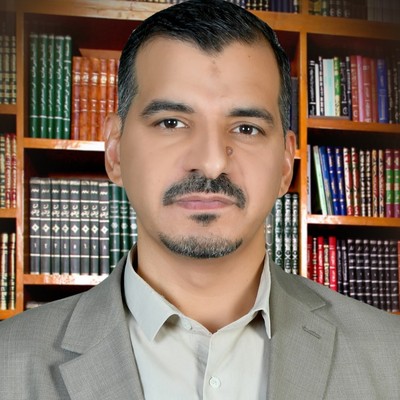
In 1977, Assistant prof. Dr.Ali Wad Abbas was born in Najaf city in the west of Iraq. Undergraduate education is supported by his work with his father in the private sector. A Bachler degree in mechanical energy with range two was awarded to him from the University of Kufa in Iraq in 2001. Because of his ranking during his undergrad degree, the university gives him a grand to complete his master's. After finishing his master's degree in energy in 2004, he became a lecturer at the same university. He taught at the University of Kufa in Iraq for more than 5 years.
He received another grant from the Ministry of Higher Education of Iraq in 2010 to complete a Ph.D. in renewable energy at the University of Malaya at Kuala Lumpur. He has worked as an assistant researcher in UM Power Energy's Dedicated Advanced Centre in Kuala Lumpur, Malaysia for two years and got his Phd in 2015. When he returned from his program with a Doctorate of Philosophy in Energy, he joined the university again and lectures there until now with a focus on modeling, heat transfer, thermodynamics, nano fluids, air conditioning, and socioeconomic analysis of renewable energy systems. In addition, he has a high interest in Artificial Neural Networks and is proficient in a wide range of engineering tools such as GIS, Tansy's, Homer, PVsolar, and CFD, with many publications in ISI journals.

Publications

2
2022

Techno-economic Analysis of Wind Turbines Powering Rural of Malaysia

AuthorsAli Wadi Al-Fatlawi, Maher Ali, Hussein Togun, Goodarz Ahmadi, Saidur Rahman, Nasrudin Abd Rahim
JournalThe International Journal of Renewable Energy Development
Abstract

The purpose of this study is to evaluate the wind energy potential and energy cost of various types of wind turbines that could be powering rural Areas. The analysis was performed on hourly wind data over three years for five locations measured with a 10 m-high anemometer in Peninsular Malaysia. The performance of wind turbines with varying hub heights and rated power was examined. The economic evaluation of wind energy in all sites was based on an analysis of the annual Levelized cost of energy. Results show that the annual mean wind speeds vary from 1.16 m/s in Sitiswan to 2.9 m/s in Mersing, whereas annual power varies from 3.6 to 51.4 W/m2. Moreover, the results show that the cost of unit energy varies between (4.5-0.38) $/kWh.The most viable site for the use of wind turbines was Mersing, while Sitiawan was the least viable site. A case study examined three wind turbine models operating at Mersing. The study showed that increasing the inflation escalation rate for operating and maintenance from 0-5% led to a decrease in the unit energy cost by about 38%. However, increasing the operating and maintenance escalation rate from 0-10% led to an increase in the unit cost of energy by about 7-8%.

2024

Thermal analysis of hybrid nanofluids inside a microchannel heat exchanger for electronic cooling

AuthorsAli Wadi Abbas , Hamid Niazmand
JournalSpringer Nature
Date2024-03-18
Abstract

In this paper, we address the morphology of nanoparticles in a base fluid as a variable to see how different shapes can be used to control thermal conductivity along with the types of nanoparticles. Hybrid and mono particle suspensions, including TiO2, Al2O3, and hybrid TiO2–Al2O3, have been used. Water and ethylene glycol are used as base fluids, and nanoparticles range from 0 to 4% in a volume fraction. The Nusselt number, average heat transfer, thermal resistance, pressure drop, and pumping power as a function of Reynolds number are studied for different nanofluids in microchannels. Overall performance is characterized by the analysis of pressure drop, pumping power, thermal resistance, and maximum power. Simulation results show that the thermal conductivity increases linearly with particle morphology. By adding 4% of HyNF (50% Al2O3-50% TiO2) with a morphology of n1 = 7 and n2 = 3, respectively, it results in a substantial 18.6% enhancement in thermal conductivity, compared to 12% and 10.04% enhancement for mono-nanofluids with Al2O3 and TiO2 nanoparticles, respectively. The type of base liquid has a negligible effect on the thermal conductivity of the same kind of nanoparticles. Nevertheless, the findings of this study provide valuable guidance for cooling microelectronic cooling components via nanofluid-based thermal management.

Lectures

2

News & Announcements

2
News 2025-02-08

Faculty of Engineering at the University of Kufa Actively Participates in the Second Regional Symposium on Innovation in Science and Technology in Iran

The Faculty of Engineering at University of Kufa played a significant role in the Second Regional Symposium on Innovation in Science and Technology, held at Ferdowsi University in Mashhad, Iran, from January 1 to 3, 2025. The event saw participation from universities across the Sultanate of Oman, Pakistan, Republic of Iraq, and various Iranian institutions. Representing the University of Kufa were Professor Dr. Hasan Mahdi Al-Khateeb and Assistant Professor Dr. Ali Wadi Al-Fatlawi, both of whom served on the symposium’s Scientific Committee.

News 2022-05-30

The College of Engineering Participates in a symposium of the Department of Media and Public Relations

Given the importance of energy in human life in general and the increasing dependence on it, and given the importance of renewable energy in bridging the gap of energy shortage and for the purpose of reducing global warming and reducing pollution, Assistant Professor Dr. Ali Wadi Abbas Al-Fatlawi from the College of Engineering participated as a lecturer in the symposium held by the Media Department at the University of Kufa in this regard. The symposium was held in the College of Medicine hall entitled “Reducing emissions and optimal use of energy.” The symposium included a detailed explanation of the environmental damages resulting from burning and excessive use of fossil fuels which affects human health and the global warming process. Dr. Al-Fatlawi included important information about the possibility of using solar energy in Najaf governorate and Najaf airport. A comparison was made with international airports that have this approach, and he also explained the possibility of using solar energy very effectively in desert areas, especially in the Najaf desert, because these areas have groundwater, high-brightness solar radiation, and fertile land for the production of agricultural fields with vast areas that can contribute to facing the food crisis and enhancing Iraq’s economic standing. The obstacles and challenges facing the renewable energy sector in Iraq have also been clarified, the most important of which is the high cost. He explained in details how the countries of the world overcome these challenges and the most important legislation, regulations and laws organized by those countries. Dr. Al-Fatlawi as the responsible of renewable energy file at the university of Kufa praised the support of the President of the University of Kufa, Prof. Dr. Yasser Lafta Hassoon, and the Dean of the College of Engineering, Prof. Dr. Hassan Mahdi Al-Khateeb, for all programs aimed to strengthen the role of the university in the field of sustainable energy. At the end of the symposium, some recommendations were raised in this field to achieve sustainable development in Iraq and reduce dependence on hydrocarbons. The University of Kufa awarded the participating professors in the symposium certificates of participation for their efforts.

View details