
مواقع التدريسيينجامعة الكوفة
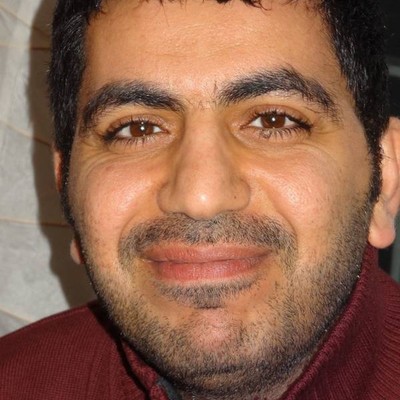
علي دلف غثيث ال فرعون
مدرس مساعد

علي دلف غثيث ال فرعون

English Version
0بحث منشور
0محاضرة
0اهتمام بحثي

الملف الشخصي

حاصل على شهادة بكلوريوس في هندسة المعلومات والاتصالات / جامعة بغداد / كلية الخوارزمي في سنة 2000

حاصل على شهادة ماجستير في هندسة الاتصالات الرقمية / جامعة كيل المانيا في سنة 2014

العمل الحالي هو في ديوان جامعة الكوفة مركز البحث والتأهيل المعلوماتي شعبة المواقع الالكترونية

الاهتمامات البحثية

1

البحوث المنشورة

4
2023

Design and implement a real-time network traffic management system using SNMP protocol

الباحثونAhmed Hazim Alhilali ، Ali Al Farawn, Ahmed Yaseen Mjhool
المجلةEastern-European Journal of Enterprise Technologies
التاريخ2023-10-30
مختصر البحث

The research focuses on designing and implementing a system for managing incoming server traffic using the Simple Network Management Protocol (SNMP). The essence of the method is to provide a real-time monitoring system that empowers network managers to oversee all network activities efficiently. The key difference of the developed system lies in using the SNMP protocol to monitor and control the network without needing a third-party tool. The proposed approach addresses administrators' common network challenges, including inefficient bandwidth utilization and complex network resource monitoring. Upon implementation, the system gathered essential network equipment information from the Management Information Base (MIB). The research results indicate that the SNMP-based network management system prevents network devices from reaching their allotted bandwidth limits. The system notably reduces CPU utilization from 28 % to 8 % and decreases bandwidth usage from 1.7 MiB/s to 260 bytes/s. Additionally, the system's alerting capability enhances the network's resilience against incoming traffic anomalies that may otherwise interrupt server operations. An example of using the proposed system to manage incoming server traffic in small networks. It has several practical uses in managing and maintaining network infrastructure in different fields. Also, it enables real-time monitoring of network devices, resource management, fault detection, and performance optimization. The system can be used in small organizations to monitor network performance, track faults, and manage network resources efficiently. In addition, SNMP-based network monitoring systems can find applications in almost any field where networked devices and infrastructure require monitoring, management, and optimization

2017

Source reconstruction via the spatiotemporal Kalman filter and LORETA from EEG time series with 32 or fewer electrodes.

الباحثونLaith Hamid، Ali Al Farawn , Isabelle Merlet , Natia Japaridze , Ulrich Heute , Ulrich Stephani , Andreas Galka , Fabrice Wendling and Michael Siniatchkin .
المجلةIEEE - Conference
مختصر البحث

Abstract— The clinical routine of non-invasive electroen- cephalography (EEG) is usually performed with 8-40 electrodes, especially in long-term monitoring, infants or emergency care. There is a need in clinical and scientific brain imaging to develop inverse solution methods that can reconstruct brain sources from these low-density EEG recordings. In this proof- of-principle paper we investigate the performance of the spa- tiotemporal Kalman filter (STKF) in EEG source reconstruction with 9-, 19- and 32- electrodes. We used simulated EEG data of epileptic spikes generated from lateral frontal and lateral temporal brain sources using state-of-the-art neuronal population models. For validation of source reconstruction, we compared STKF results to the location of the simulated source and to the results of low-resolution brain electromagnetic tomography (LORETA) standard inverse solution. STKF con- sistently showed less localization bias compared to LORETA, especially when the number of electrodes was decreased. The results encourage further research into the application of the STKF in source reconstruction of brain activity from low- density EEG recordings.

2017

Spatial projection as a preprocessing step for EEG source reconstruction using spatiotemporal Kalman filtering.

الباحثونLaith Hamid، Ali Al Farawn , Isabelle Merlet , Natia Japaridze , Ulrich Heute , Ulrich Stephani , Andreas Galka , Fabrice Wendling and Michael Siniatchkin
المجلةIEEE - Conference
مختصر البحث

Abstract— The reconstruction of brain sources from non- invasive electroencephalography (EEG) or magnetoencephalog- raphy (MEG) via source imaging can be distorted by in- formation redundancy in case of high-resolution recordings. Dimensionality reduction approaches such as spatial projection may be used to alleviate this problem. In this proof-of-principle paper we apply spatial projection to solve the problem of information redundancy in case of source reconstruction via spatiotemporal Kalman filtering (STKF), which is based on state-space modeling. We compare two approaches for incorpo- rating spatial projection into the STKF algorithm and select the best approach based on its performance in source localization with respect to accurate estimation of source location, lack of spurious sources, computational speed and small number of required optimization steps in state-space model parameter es- timation. We use state-of-the-art simulated EEG data based on neuronal population models, for which the number and location of sources is known, to validate the source reconstruction results of the STKF. The incorporation of spatial projection into the STKF algorithm solved the problem of information redundancy, resulting in correct source localization with no spurious sources, and decreased the overall computational time in STKF analysis. The results help make STKF analyses of high-density EEG, MEG or simultaneous MEG-EEG data more feasible.

2014

Master's Thesis : Comparision of Static and Dynamic Source Imaging of Epileptiform Discharges Simulated Using a Neuronal Population Model

الباحثونAli Dalaf
المجلةKiel university
مختصر البحث

Comparison of Static and Dynamic Source Imaging of Epileptiform Discharges Simulated Using a Neuronal Population Model. In this thesis, inter-ictal epileptiform discharges (spikes), simulated using realistic neuronal population models , are to be used for validating EEG source imaging methods. Current sources from four anatomical areas, that are relevant for epilepsy pre-surgical evaluation, were used to simulate four EEG datasets. This was done by assigning certain excitation, inhibition and connectivitiy parameters to a set of interconnected neuronal populations. The first aim of this master thesis is the investigation of the possibility of localising brain sources from the four anatomical areas using the dynamical approach of spatiotemporal Kalman filtering . In addition to that, the results should be compared to those from static source imaging methods, e.g. LORETA, and considering the effects of the following factors: - The location of the sources in the brain -The area of cortical activation -The number of electrodes -The source grid resolution -Measurement noise level Finally, the results should then be used to improve the dynamical models used in the spatiotemporal Kalman filtering method.

المحاضرات

4
عرض التفاصيل